

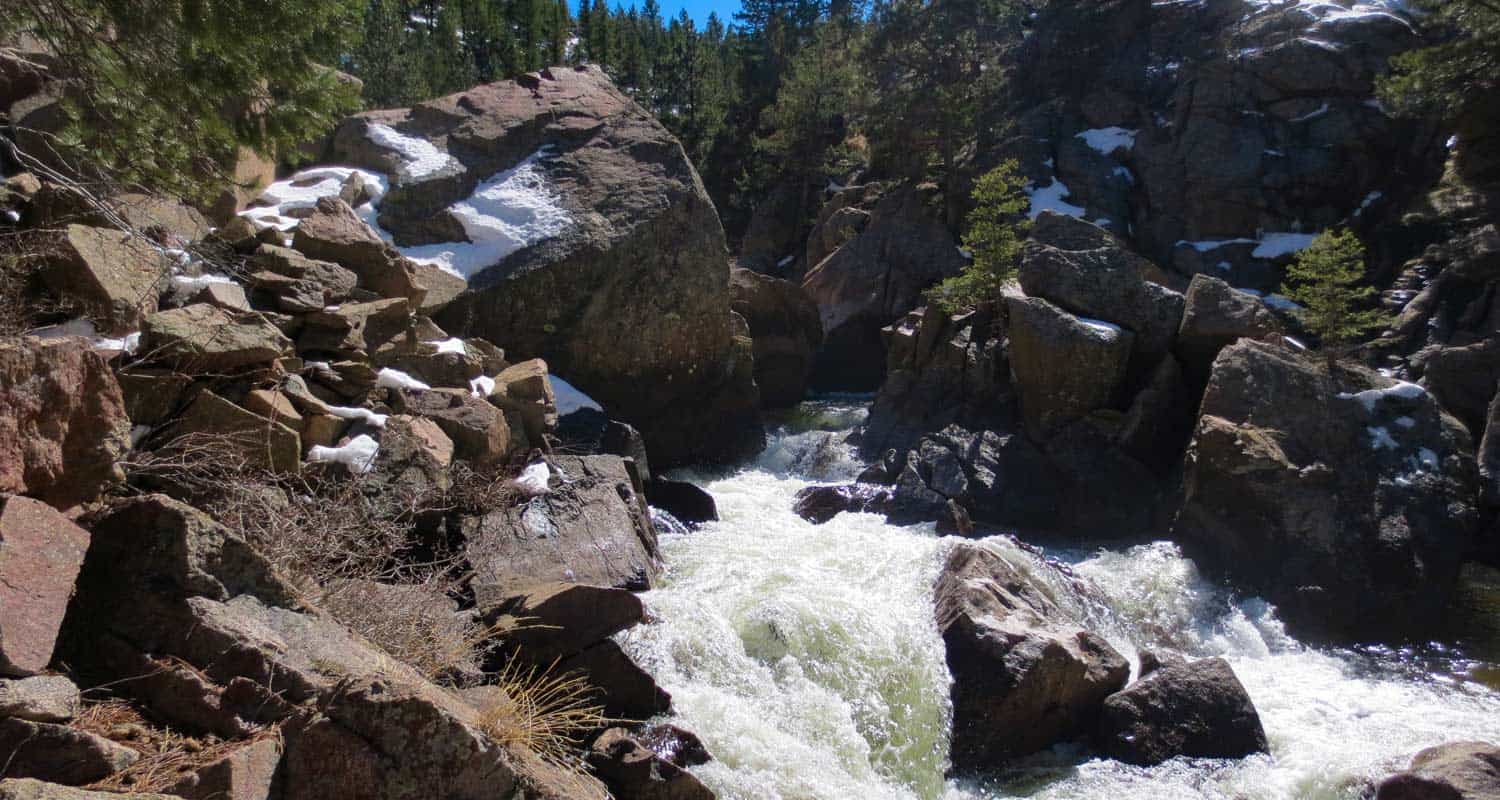
Eldorado Cascades at Walker Ranch
Eldorado Cascades is tucked back in Walker Ranch near Boulder, Colorado. It's an easy to moderate 1.25 mile hike from the Ethel Harrold Trailhead down to where South Boulder Creek winds through the park and crashes over the boulders blocking its path. Explore the full trail profile below for all the details: tips, trail map, and driving directions to the trailhead.
Trail Snapshot: Eldorado Cascades at Walker Ranch
| Hike Distance | 2.5 mile Round Trip |
|---|---|
| Difficulty | Moderate |
| Duration | Approx 1.5 hr Round Trip |
| Trail Type | Out and Back |
| Starting Elevation | 7000′ |
| Elevation Gain | Approx -500' to Cascades, +500 back to Trailhead |
| Seasons | Spring through Fall |
| Dogs | Allowed On Leash |
| Hike Trail Map | Click for a Map of Walker Ranch |
| Denver Drive Time | 1 hr |
| Driving Directions to Walker Ranch Ethel Harrold Trailhead | Click for Google Map |
| Town Nearest Hike | Boulder, Colorado |
| Beauty | Boulder Creek, Cascades, Wildlife: Birds, Elk |
| Activities | Hiking, picnic facilities, mountain biking, horseback riding |
Eldorado Cascades can be reached from several different trailheads that tie into the Walker Ranch Loop system. However, the shortest and probably easiest access is by starting at the Ethel Harrold Trailhead. See the directions driving directions links on this page, and be sure to make note of your last couples turns because cell phone services are spotty.
The drive up to the trailhead on Flagstaff Road is a beautiful one, but do be aware of the many hikers, climbers, and cyclists along the road. After Flagstaff road, the two roads that lead to the trailhead, Pika, then Bison, are improved dirt roads. These were recently graded when we visited (early April) and were fine to drive. However, 4-wheel drive is probably necessary during the winter months or after early Spring rains or snowfall. The trailhead parking area has a pit toilet and information board. If you are interested in birdwatching, you'll find a Birds of Walker Ranch Chechlist at the board.
The Hike to Eldorado Cascades
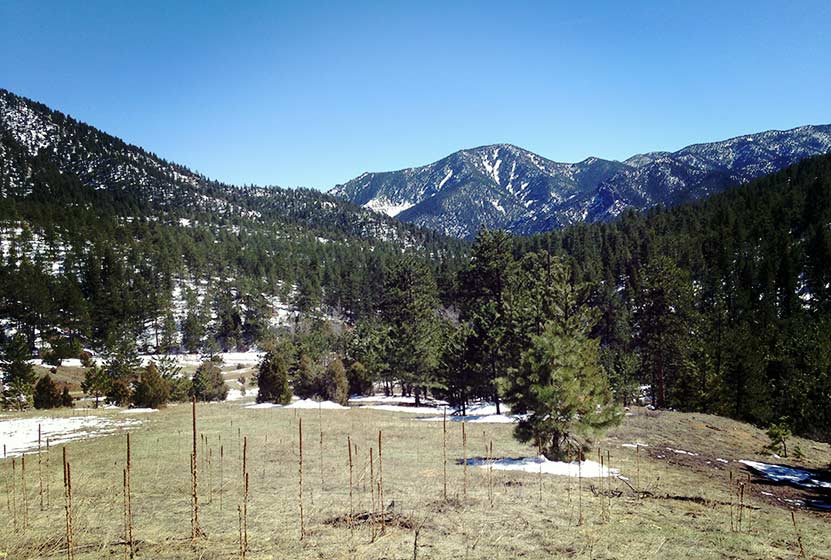
The hike begins with expansive views of Walker Ranch and out towards Eldorado Canyon State Park (pictured above). The air was full of the scent of juniper trees, and we found abundant Elk sign in the meadows near the trailhead. The trail winds down to a intermittent stream that was gushing with the early Spring snowmelt. A bridge buried in snow leads across the creek, then the trail skirts the hillside for most of the hike, gradually working its way down to a junction with the Walker Ranch Loop Trail. At the junction, the trail to Boulder Creek and Eldorado Cascades is to the right and takes hikers further downhill to a bridge that crosses South Boulder Creek.
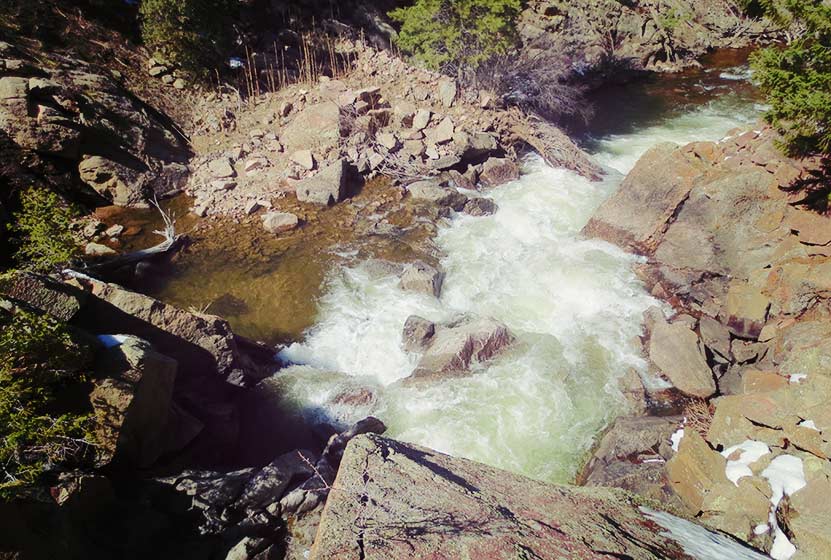
The sound of water is almost always within earshot, and the chirps of a variety of birds fill the air. Shortly before the bridge, hikers may notice a "To Eldorado Canyon" sign and trail on the left side of the Walker Ranch Trail. This leads to Eldorado Canyon State Park, about 3.5 miles away, but does not lead to the cascades. The cascades can be found almost immediately after crossing the bridge that spans South Boulder Creek. Here the trail becomes a series of uneven rock stairs that lead to the top of the cascades (pictured above is view from the top).
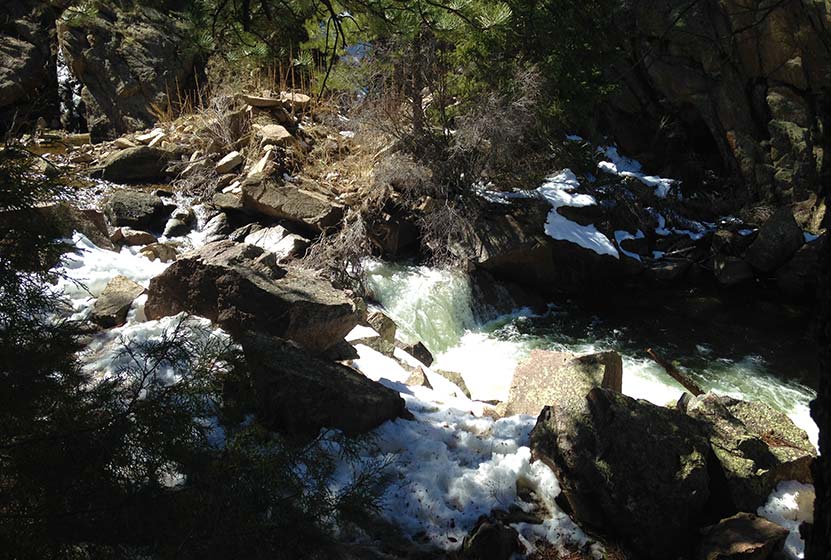
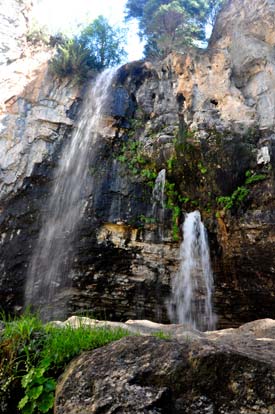
"Eldorado Falls" seems to be a local and unofficial name given to this set of cascades. The trail map simply marks them as "falls." On the back side of the cascades, South Boulder Creek seems to disappear under massive boulders that block its path. Here the water slips under the rock then shoots out on the other side in a series of small cascades. The water pools, then pours over another lower cascades (pictured above) before returning to calmer waters.
The hike back is mostly uphill, but it's only about a +500' of elevation gain. The park is open in the winter; however, the trail from the Ethel Harrold trailhead down to the Walker Ranch Loop might become difficult to discern after a blanket of snow. So, the ideal times are Spring through Fall.
Tips & Resources for Hiking to Eldorado Cascades
- Come Prepared in Spring and Winter: Because the trail is mostly in shade of ponderosa pines, the snow and ice can settle in during both winter and spring. Therefore, we recommend Trekking Poles and/or Traction Devices for this trail (I wish I had brought mine).
- Exercise Caution Around the cascades: The area around Eldorado Cascades is rocky and uneven. The cascades are also difficult to photograph because of how it's tucked back into the canyon. For this reason, exercise caution along the slippery rock and near the waters of South Boulder Creek.
- Trail Map for Walker Ranch: Trail Map Link
- Packing List: Always pack the 10 Essentials. Download our Hiking Guide to get list and dayhiking packing checklist.
- Colorado Road Conditions: Colorado Road Conditions
- After the Hike: Ozo Coffee in Boulder
Weather
Map & Driving Directions
Click for Driving Directions
Looking for waterfalls near Denver? Explore our more than 50 Colorado Waterfall Hikes, our favorite Waterfall Hikes in Rocky Mountain National Park, or 7 Waterfalls within One Hour of Denver.

Sky Pond in Rocky Mountain National Park
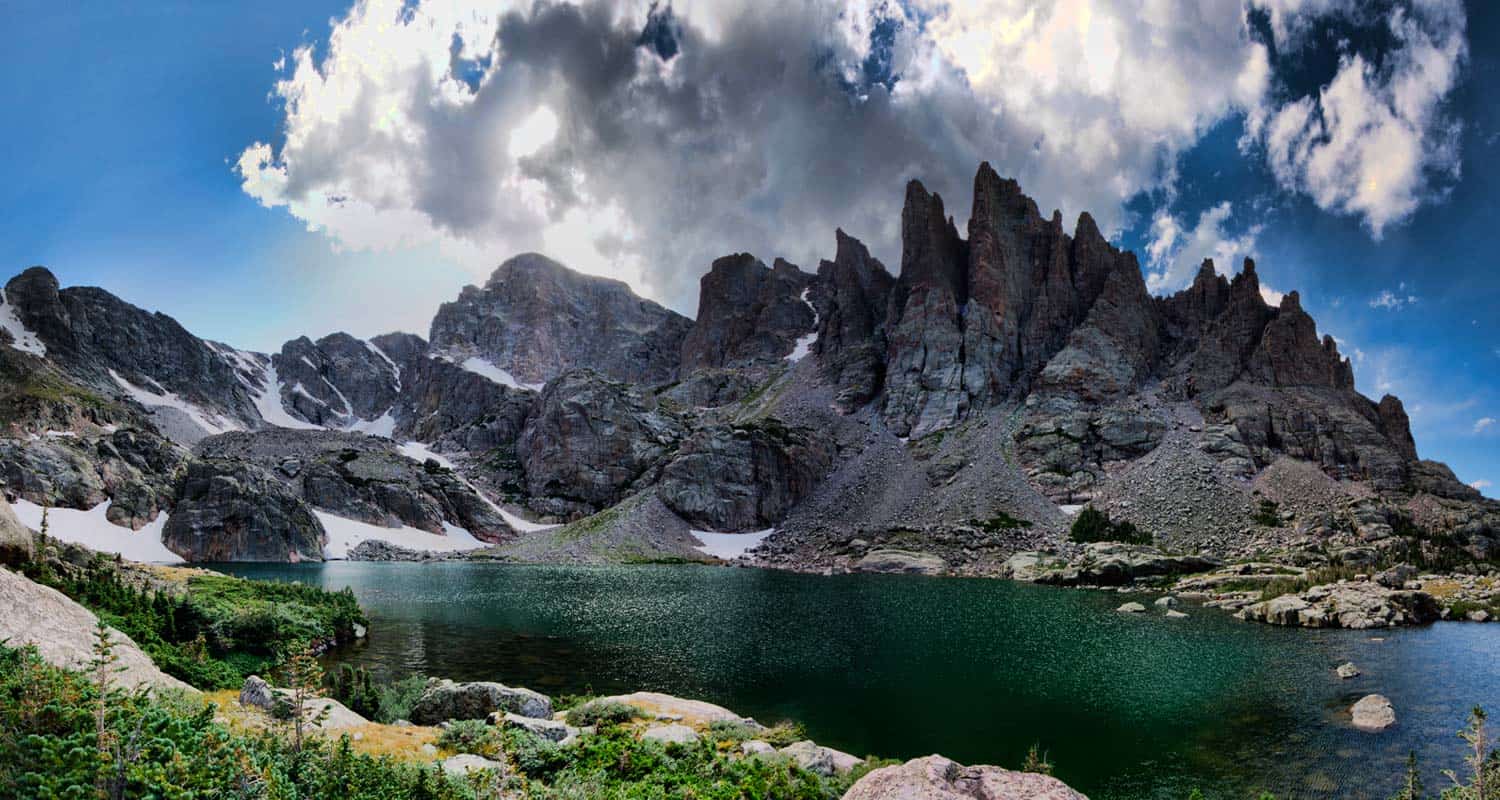
Situated above Timberline Falls in Rocky Mountain National Park are two spectacular lakes. The highest of the two is Sky Pond, and the lower is called The Lake of Glass. This demanding hike begins at the Glacier Gorge trailhead and takes you past at least three waterfalls and a beautiful set of cascades. Rewards await those who hike all the way up to Sky Pond. Explore our Sky Pond trail profile below for trail details, driving directions, maps, and more.
Note: Rocky Mountain National Park now requires timed entry permits from May 27th through October 10th. See the RMNP permits page for more information.
Trail Snapshot: Sky Pond Hike in Rocky Mountain National Park
| Hike Distance | 9+ miles Round Trip |
|---|---|
| Difficulty | Difficult |
| Duration | Approx 5 hr+ Round Trip |
| Trail Type | Out and Back |
| Starting Elevation | 9240' at Trailhead |
| Elevation Gain | Approx +1647′ |
| Seasons | May-September |
| Dogs | Prohibited in RMNP |
| Hike Trail Map | Click for a Map of Sky Pond in Rocky Mountain National Park |
| Denver Drive Time | 2 hr |
| Driving Directions to Glacier Gorge Trailhead | Click for Google Map |
| Town Nearest Hike | Estes Park, Colorado |
| Beauty | Lakes, wildflowers, waterfall, wildlife: elk, deer, birds |
| Activities | Hiking, fishing, photography |
| Fee | Park Pass Required |
Sky Pond Directions & Trailhead Information
The trail up to Sky Pond begins at either the Glacier Gorge Trailhead (see driving directions above), or at the Bear Lake Trailhead (driving directions). Because the Glacier Gorge Trailhead has a much smaller lot, you may need to drive further up to Bear Lake. There you'll find a short connector trail that will put you on the path down and over to the Glacier Gorge Trail system. In the event that parking at Bear Lake is full, you'll then need to park at the Park & Ride near the Bierstadt Trailhead and take the bus into the trailhead. This service runs 7am to 7PM and more information on the RMNP shuttle bus routes can be found at this link.
Hike to Sky Pond and Lake of Glass
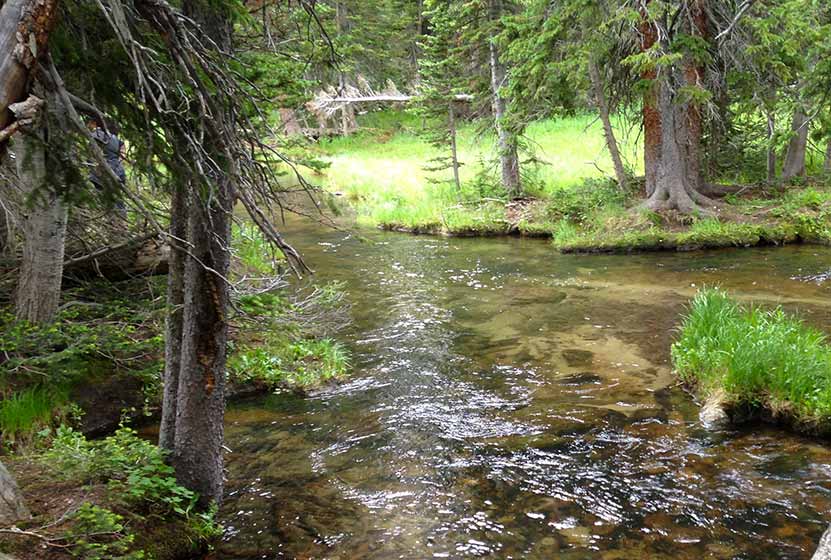
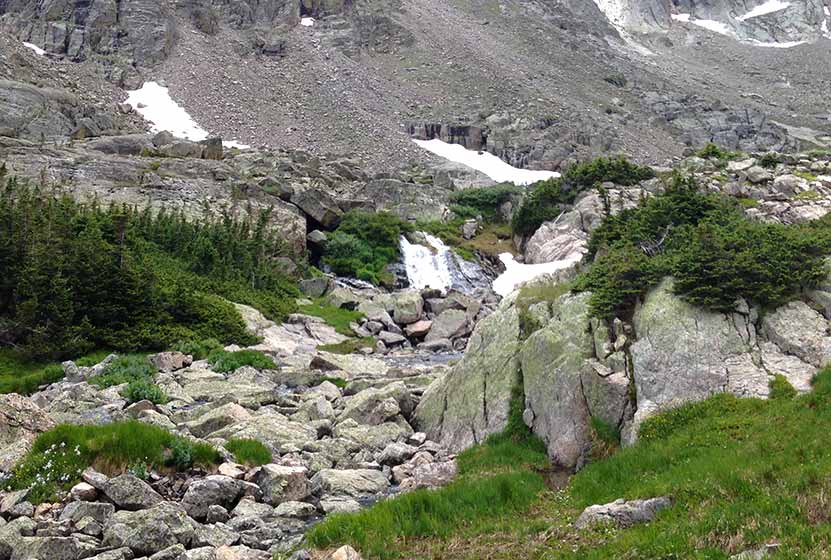
The first destination that you can't and don't want to miss is at .8 miles, Alberta Falls. The trail then climbs toward an eventual trail junction. The way to the Sky Pond is to follow the Glacier Gorge/Loch Vale trail that bears right and ascends for about another .5 mile to the next trail junction. At this second junction, the middle of the three trails leads onto the Loch Vale Trail, and up to the Loch, Timberline Falls, and eventually beyond to Sky Pond. Pictured Above: Creek between the Loch and Timberline Falls.
At Timberline Falls, the trail up to Lake of Glass and Sky Pond is a steep scramble to the right-side of the waterfall. Be aware, the rock may be slick and this area is very steep. Hikers should have good footwear, and may need to be patient for those who are descending this section of the trail. In most of this segment, there is only room for one hiker at a time to safely negotiate the scramble. Many hikers will find the descent of this short portion of the trail more difficult than the way up.
The first lake, Lake of Glass, is only about a quarter-mile beyond Timberline Falls. Many stop here thinking that it's Sky Pond--but it's not. From this vantage point, it's hard to imagine that there is more. However, approximately another quarter-mile will lead to Sky Pond, which is twice the size of Lake of Glass. There is a waterfall hidden just below the Lake of Glass. See our trail profile for this waterfall for details. Pictured below: The Sharks Tooth at Sky Pond.
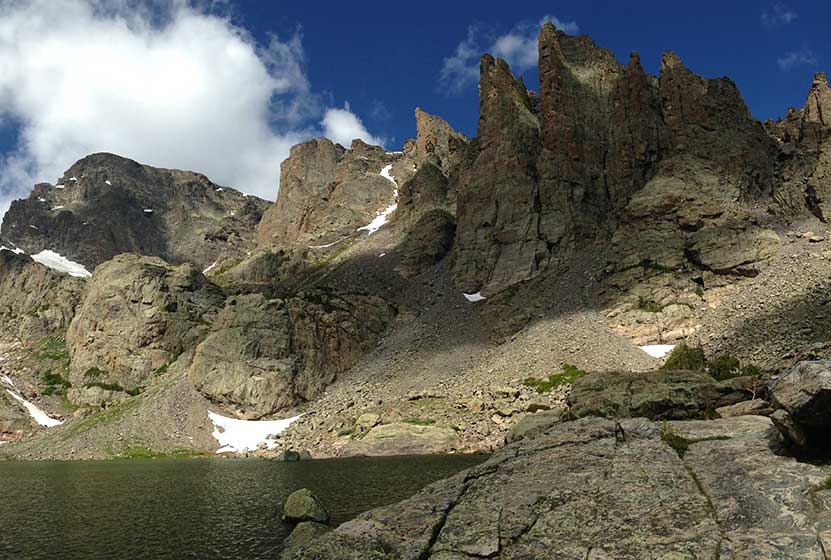
Sky Pond is surrounded by fields of columbines and other wildflowers. A small shelf waterfall spills out of Sky Pond (pictured below), and a marsh between the two lakes is the home to a beautiful collection of marsh marigolds. From the southwestern shores of Sky Pond, there are incredible views of Petit Grepon, the Sabre, and Sharkstooth--three prominent peaks that surround this high mountain lake.
List and Links of Destinations Along the Loch Vale Trail
1. Alberta Falls - @ .8
2. The Loch - @ 2.7 miles
3. Timberline Falls - @ 4 miles
4. Lake of Glass & Waterfall -@ 4.2 miles
5. Sky Pond - @ 4.6 miles
Tips & Resources for Trail to Sky Pond & Lake of Glass in RMNP :
- You Might Miss it: Lots of people stop at Lake of Glass and think they have made it to Sky Pond. It's not much further, but it is hidden because of the elevation difference.
- Get There Early: There are two important reasons to begin your hikes early in the morning in Rocky Mountain National 1)The trail head parking lots fill up early, and 2) in the Summer months, thunderstorms will form in the early afternoon.
- Trail Map for Bear Lake Corridor: Trail Map Link
- Recommended Map for Rocky Mountain National Park: The trail maps provided by Rocky Mountain National Park are usually sufficient. However, if you plan to hike RMNP often, we recommend purchasing a National Geographic Trails Illustrated Map.
- Colorado Road Conditions: Colorado Road Conditions
- Photo: We would like to express our gratitude to Steven Bratman for sharing such an amazing photograph of this hike.
- After the Hike: Inkwell Brew Coffee
Weather
Map & Driving Directions
Click for Driving Directions

The Loch in Rocky Mountain National Park
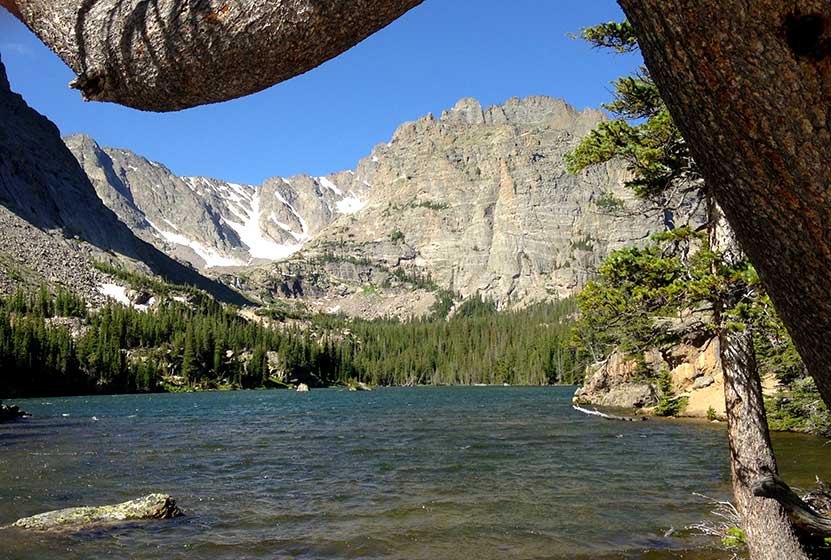
If lakes are your favorite destination, then the hike to The Loch should be added to your trail list in Rocky Mountain National Park. It is a moderately difficult hike on the eastern side of the park where you can hike along the edge of the lake, fish for trout, or come early in the morning to photograph the iconic scenery in Loch Vale. Explore the full trail profile below for driving directions to the trailhead, trail map, and other destinations that can be added to the hike.
The Loch is the Gaelic name given to this lake, the major destination along the Loch Vale trail and the source of Icy Brook, the stream that spills from its eastern edge. Because of it's beauty and the wide variety of vantage points for outstanding scenery, the Loch is popular with photographers. We've found it to be a perfect hike to a tranquil spot to take in the views and enjoy a picnic lunch.
Note: Rocky Mountain National Park now requires timed entry permits from May 27th through October 10th. See the RMNP permits page for more information.
Trail Snapshot: The Loch in Rocky Mountain National Park
| Hike Distance | 5.5+ mile Round Trip |
|---|---|
| Difficulty | Moderate |
| Duration | Approx 3 hr Round Trip |
| Trail Type | Out and Back |
| Starting Elevation | 9240' at Trailhead |
| Elevation Gain | Approx +1000′ |
| Seasons | June-September |
| Dogs | Prohibited in RMNP |
| Hike Trail Map | Click for a Map of The Loch |
| Denver Drive Time | 2 hr |
| Driving Directions to Glacier Gorge Trailhead | Click for Google Map |
| Town Nearest Hike | Estes Park, Colorado |
| Beauty | Lake, wildflowers, waterfall, wildlife: elk, deer, birds |
| Activities | Hiking, fishing, photograph |
| Fee | Park Pass Required |
Parking & Trailhead Information
The trail to the Loch, and the destinations beyond, begins at either the Glacier Gorge Trailhead (see driving directions above), or at the Bear Lake Trailhead (driving directions). Because the Glacier Gorge Trailhead has a much smaller lot, you may need to drive further up to Bear Lake. There you'll find a short connector trail that will put you on the path down and over to the Glacier Gorge Trail system. In the event that parking at Bear Lake is full, you'll then need to park at the Park & Ride near the Bierstadt Trailhead and take the bus into the trailhead. This service runs 7am to 7PM and more information on the RMNP shuttle bus routes can be found at this link.
The Hike to The Loch
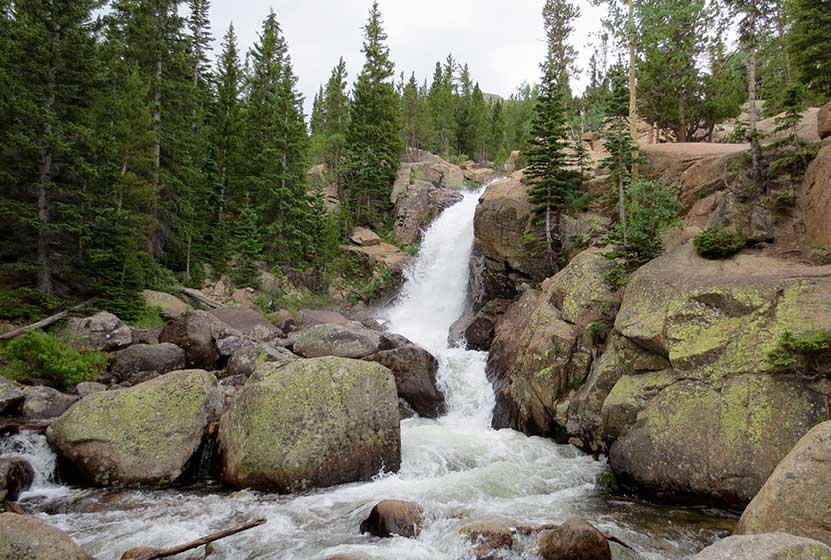
The first destination that you can't and don't want to miss is at .8 miles, Alberta Falls (photo above). The trail then climbs toward an eventual trail junction. The way to the Loch is to follow the Glacier Gorge/Loch Vale trail that bears right and ascends for about another .5 mile to another trail junction. At this second junction the trail to the left will take hikers to Glacier Gorge, and the trail to the right takes hikers on a jaunt to Lake Haiyaha. The middle trail leads onto the Loch Vale Trail, and up to the Loch.
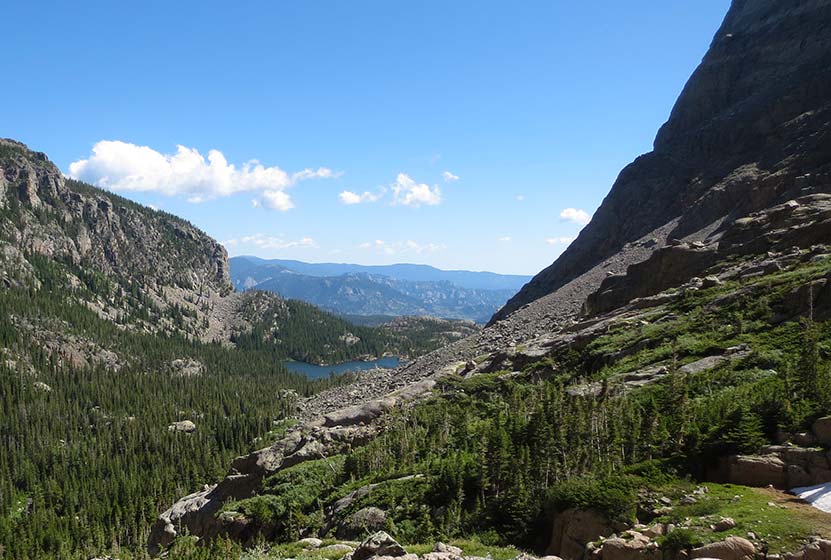
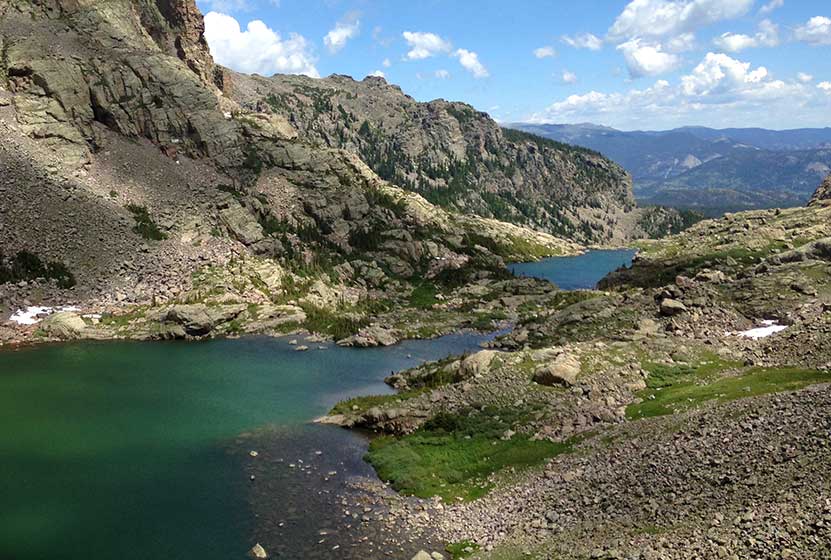
Pictured Above: The Loch as seen from the heights near Timberline Falls. Take care to stay the trail as you explore the Loch. It's a heavily visited area with equally heavy impact. The Loch hosts a variety of trout: brookies, cutbows, cuthroats, and rainbows. Mayflies and Caddis flies are common hatches, and black or chernobyl ants can be a particularly good terrestrial pattern to use at the Loch. The wind can kick up along the lake, especially as the rises and warms the rock walls that surround the lake. Some areas on the southern side provide calmer waters. Photographers will find morning sunrises the best time to photograph the amazing landscape of the lake and mountains.
List and Links of Destinations Along the Loch Vale Trail
1. Alberta Falls - @ .8
2. The Loch - @ 2.7 miles
3. Timberline Falls - @ 4 miles
4. Lake of Glass -@ 4.2 miles
5. Sky Pond - @ 4.6 miles
Tips & Resources for Hiking to the Loch in RMNP:
- Hike Further: Be sure to hike and additional approx 1.25 mile (one-way) to Timberline Falls to see one of the most beautiful waterfalls in Rocky Mountain National Park.
- Get There Early: There are two important reasons to begin your hikes early in the morning in Rocky Mountain National 1)The trail head parking lots fill up early, and 2) in the Summer months, thunderstorms will form in the early afternoon.
- Parking: If the parking lot is full at Glacier Gorge Trailhead, there is a shuttle available to take you to the trailhead. This service runs 7am to 7PM and more information on the RMNP shuttle bus routes can be found at this link.
- Trail Map for Bear Lake Corridor: Trail Map Link
- Recommended Map for Rocky Mountain National Park: The trail maps provided by Rocky Mountain National Park are usually sufficient. However, if you plan to hike RMNP often, we recommend purchasing a National Geographic Trails Illustrated Map.
- Colorado Road Conditions: Colorado Road Conditions
- After the Hike: Inkwell Brew Coffee
Weather
Map & Driving Directions
Click for Driving Directions
Timberline Falls in Rocky Mountain National Park
Timberline Falls is a demanding 8-mile round-trip waterfall hike in Rocky Mountain National Park. The trail takes you past Alberta Falls up into beautiful Loch Vale. Beyond Timberline Falls hikers will find Lake of Glass, additional falls, and breathtaking Sky Pond.
Glacier Gorge is the home to some of the best hiking in Rocky Mountain National Park, and this waterfall hike is one of the best. Be sure to read through the trailhead and parking information below, because, in the busy season, parking fills up fast. Explore our Timberline Falls trail profile below for trail details, driving directions, maps, and more.
Note: Rocky Mountain National Park now requires timed entry permits from May 27th through October 10th. See the RMNP permits page for more information.
| Hike Distance | 8 miles Round Trip |
|---|---|
| Difficulty | Difficult |
| Duration | Approx 5 hr |
| Trail Type | Out and Back |
| Starting Elevation | 9240′ |
| Elevation Gain | +1510′ |
| Seasons | May-September |
| Dogs | Dogs Prohibited |
| Hike Trail Map | Click for a Map of Timberline Falls |
| Denver Drive Time | 2 hr |
| Driving Directions | Click for Google Map |
| Town Nearest Hike | Estes Park, Colorado |
| Beauty | Waterfall, wildlife: elk, deer, marmots; meadows, lakes, streams |
| Activities | Hiking, photography |
| Fee | Park Pass Required |
Parking & Trailhead Information
The trail up to Timberline Falls begins at either the Glacier Gorge Trailhead (see driving directions above), or at the Bear Lake Trailhead (driving directions). Because the Glacier Gorge Trailhead has a much smaller lot, you may need to drive further up to Bear Lake. There you'll find a short connector trail that will put you on the path down and over to the Glacier Gorge Trail system. In the event that parking at Bear Lake is full, you'll then need to park at the Park & Ride near the Bierstadt Trailhead and take the bus into the trailhead. This service runs 7am to 7PM and more information on the RMNP shuttle bus routes can be found at this link.
The Hike to Timberline Falls
The hike up into the Glacier Gorge/Loch Vale trail system takes you past one of Rocky Mountain National Parks' most accessible waterfalls, Alberta Falls.
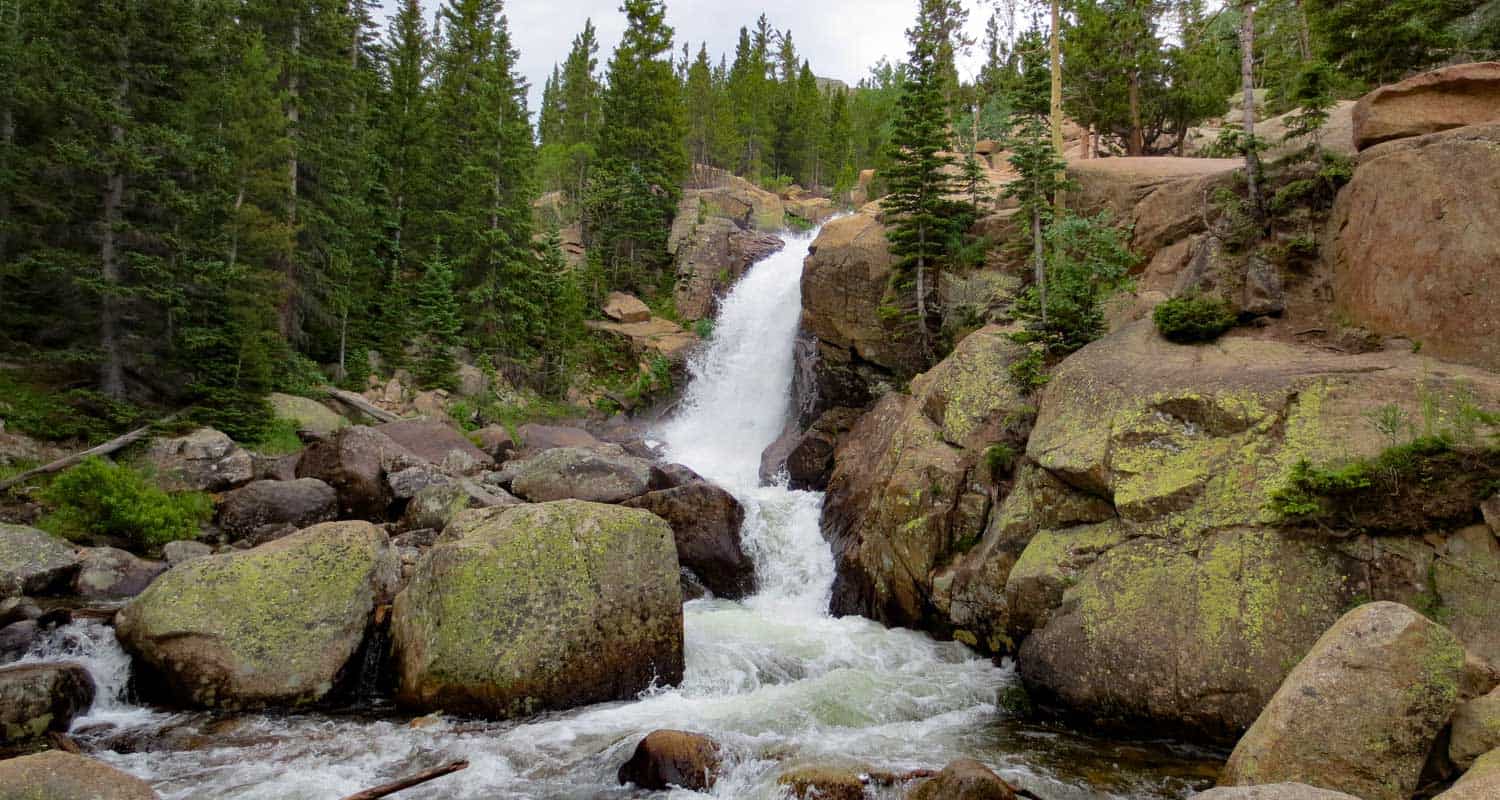
After the waterfall, the trail begins to wind up a series of switchbacks for just shy of a mile until a trail junction with the NorthLong's Peak Trail. The trail into Glacier Gorge/Loch Vale then bears right and ascends for about another .5 mile to another trail junction. The trail to the left will take hikers to Glacier Gorge, and the trail to the right takes hikers on a jaunt to Lake Haiyaha (fun to say three times fast) but this trip to Timberline Falls takes the middle trail onto the Loch Vale Trail.
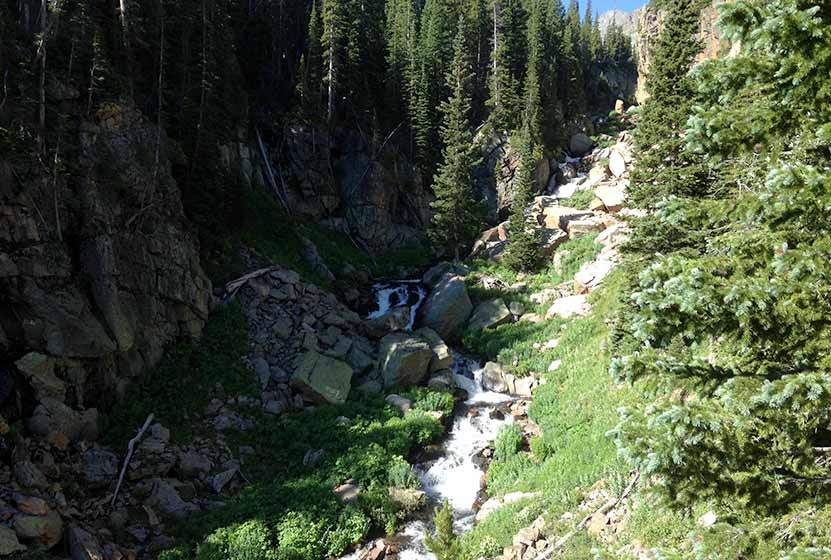
The path follows the path of Icy Brook through a series of longer switchbacks. The brook can be heard gushing and pouring over the rocks below, and one particular switchback there is a great view of its waters casacading through a green canyon (pictured above). At approximately 1 mile after leaving the junction, the trail opens up to more level ground at The Loch. In the distance, beyond the Loch in the west, the cliff face of the Cathedral Wall calls technical climbers to its challenging routes.
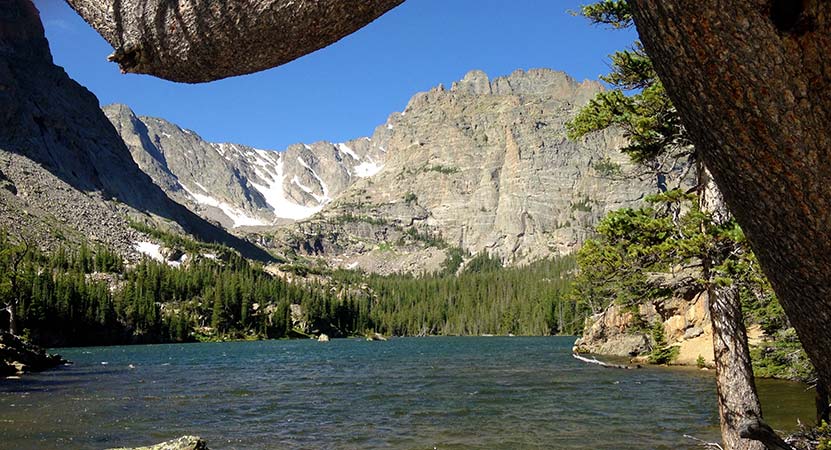
The trail continues along the right side of the Loch until another trail junction beyond its western shores and deep in the the lush forest surrounding Icy Brook. The trail up to Timberline Falls, Lake of Glass, and Sky Pond is on the left, and the path to the right will take hikers into the Andrew's Creek area, one of my favorite areas of the Park. Here the trail up to Timberline Falls gets more steep, working its way up through subalpine forest of fir and spruce, the ground bejeweled with Columbine flowers. Soon you'll gain views of the falls in the distance.
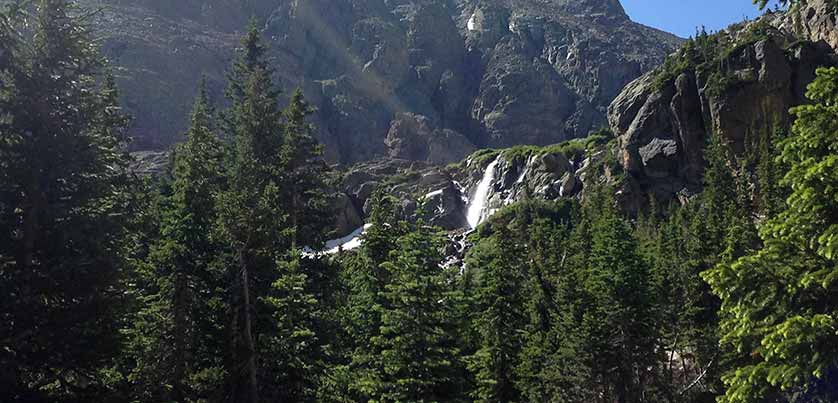
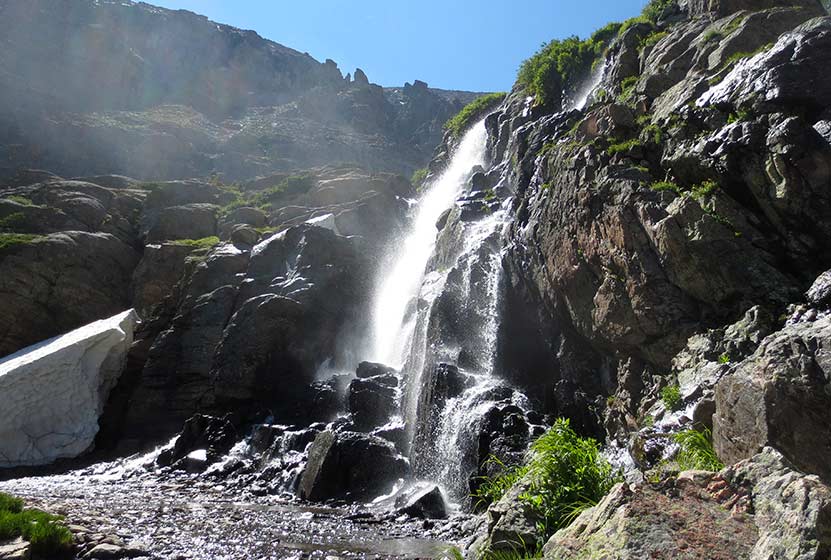
A series of stone stairs takes you to the base of the waterfall. In the late Spring and Early Summer, the falls cut through the winter snowpack and creates fantastic shapes out of the snow. For hikers who want to see more, a very steep and slick trail can be found to far right side of the waterfall. This leads up to the Lake of Glass, it's own waterfall, and to Sky Pond.
Video of Timberline Falls in RMNP
Tips & Resources for Hiking Timberline Falls :
- More to Explore: Be sure to budget extra time to explore the lakes above Timberline Falls.
- Parking: If the parking lot is full at Glacier Gorge Trailhead, there is a shuttle available to take you to the trailhead. See details at the the top of this trailprofile
- Gear: Wear good boots with soles that are good for grabbing the rock if you plan to scramble up the steep trail to Lake of Glass and Sky Pond.
- Pack a Lunch: This is a long hike and you'll certainly need water, but you'll also most likely need fuel for the journey back. Download our hiking guide for a list of great hiking food and snacks.
- Trail Map for Bear Lake Corridor: Trail Map Link
- Packing List: Always pack the 10 Essentials. Download our Hiking Guide to get list and dayhiking packing checklist.
- Colorado Road Conditions: Colorado Road Conditions
- After the Hike: Inkwell & Brew Coffee
Weather
Map & Driving Directions
Ultimate Guide to Maroon Bells in Colorado
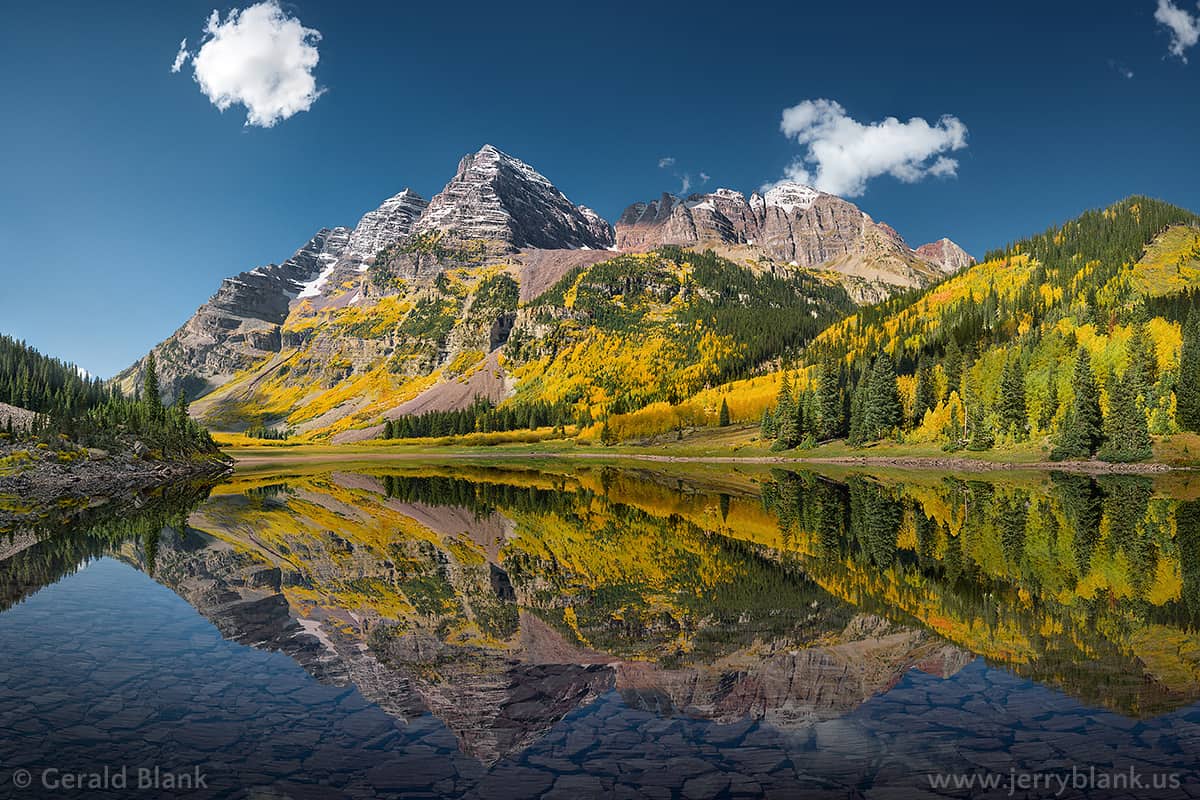
The Maroon Bells offer several hikes and some of the most beautiful scenery in Colorado. It's a Rocky Mountain landscape painted with cascades, lakes, golden aspens, and all against the backdrop of the peaks of the Maroon Bells. This guide to the Maroon Bells features 5 different hiking trail options, spanning from easy hikes to moderately demanding. Because traffic in this area has skyrocketed in recent years, a fee is required to access whether you are driving in or taking the shuttle.
We've attempted to create the definitive guide to hiking from the Maroon Bells Trailhead. In this guide, you'll find: Driving directions to Maroon Bells, Trail Maps, Important Shuttle Bus information, Photography tips, Camping information for the Maroon Bells area, and Tips & Resources for planning your Colorado Vacation. This guide to Maroon Bells is extensive, so we have created a table of contents to help you navigate. Have fun exploring!
Maroon Bells Hiking Guide Contents
1. Trail Snapshot
2. Driving Directions: Parking, Fees, and Permits
3. Parking & Trailhead
4. Hiking the Trail
5. Maroon Lake Trail
6. The Scenic Loop Trail
7. Maroon Creek Trail
8. The Crater Lake Trail
9. The Willow Lake Trail
10. Photography
11. Hiking with Kids
12. For Out-of-State Hikers
13. Things to Do Nearby
14. History and Geology
15. Protect Maroon Bells
Maroon Bells Hike Snapshot
Hike DistanceFive Trails: 1 to 13 miles Round Trip - Depending on TrailDifficultyEasy to ModerateDurationDepends on Hike (see trails below)Trail TypeBoth Loop and Out-and-Back HikesStarting Elevation9500′Elevation GainNominal up to +3030'SeasonsMid-May to Mid-November (weather dependent)DogsAllowed On 6' leash - but Prohibited on the Scenic Loop TrailHike Trail MapClick for a Map of Maroon Bells Area HikesDenver Drive Time4 hoursDirections Click for Driving Directions to Maroon Bells Town Nearest HikeAspen, ColoradoBeautyIconic Mountain Views, Lakes, Meadows, Tundra, Fall Aspens, Moose, Beaver, and ElkActivitiesHiking, Backpacking, CampingFeeAccess Fee of $10 per vehicle or individual shuttle bus fee
Driving Directions to Maroon Bells: Parking, Fees, and Permits
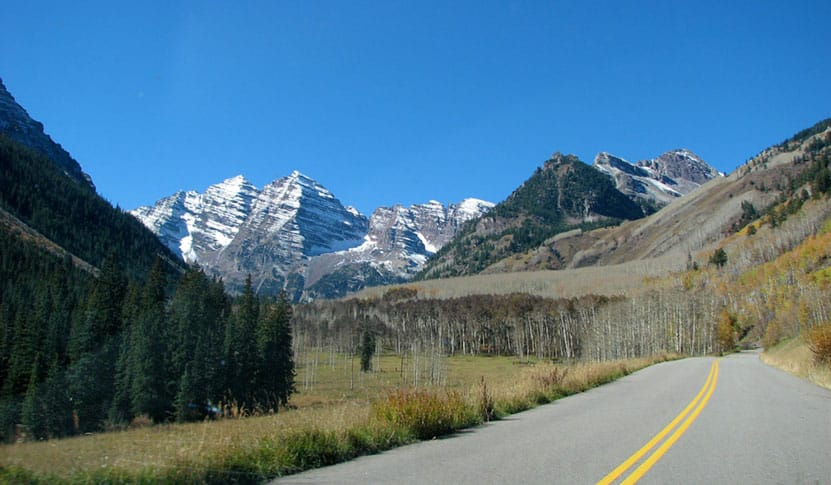
Because the Maroon Bells trailhead is one of the heaviest used recreation areas in the state of Colorado, there are some driving and access restrictions during the busy summer months. That's why it's important to carefully read these details before you plan your trip.
The Basics
- The Maroon Bells Trailhead is seasonal, and closed from about mid-November though mid-May. Because snow is unpredictable, the exact dates may change. Check the AspenChamber.org page for the most up-to-date and accurate information.
- Parking is very limited at the Trailhead and requires both a permit/reservation and fee. Read all the details at the AspenChamber.org Maroon Bells Reservations page.
- During the busy season, you have to arrive and park at the trailhead by 8AM or After 5PM.
- Most visitors will need to take the shuttle in during the day. Tickets are available online at the RFTA website https://www.rfta.com/routes/maroon-bells/
- Be prepared to shell out some cash for the trip. Parking in Aspen is both limited and expensive. Parking + shuttle costs can really add up for a group. The least expensive way to visit, is to book a parking permit for the trailhead (often many weeks ahead of time) at https://aspenchamber.org/plan-trip/trip-highlights/maroon-bells/reservations
- Plan, Plan, Plan: There are still a ton of places in Colorado where you can jump in the car, drive to a trailhead, and hike. Maroon Bells is not one of them. So, take your time, make your reservations, and plan out your trip.
Driving Directions
There are three different sets of driving directions that you may find helpful.
- Driving Directions to the Maroon Bells Trailhead
- Driving Directions to the Maroon Bells Shuttle Bus service at Aspen Highlands
- Driving Directions to the Rubey Park in Aspen for the free shuttle to Aspen Highlands where you can catch the Shuttle
Access Tips for Maroon Bells in the Summer
- If the Aspen Highlands lot is full--which is often the case--, you can take the free Castle/Maroon bus from Rubey Park in Aspen to Aspen Highlands, where can pick up the Maroon Bells shuttle (link and map for directions to Rubey Park).
- It's also important to note that if your plans are to backpack and camp in the Maroon-Snowmass Wilderness, you will not be given a parking exception, but will need to take the bus in from the Aspen Highlands lot during the 8am-5pm timeframe.
- Another option is to cycle the 8 miles, one-way from Aspen Highlands up to the Maroon-Snowmass trailhead. There is no fee for cyclists, only vehicles. However, it's important to remember that the road is still very busy, even during the 8am-5pm hours when the driving restrictions apply. As with hiking the area, plan to bring proper gear for the frequent afternoon thunderstorms--yet another reason to go early.
- Driving Out: It's important to note that if you drive in to the trailhead, you may drive out at any time.
Access Tips for Maroon Bells During the Rest of the Year
- In Late-Spring: From when Maroon Creek road opens, which is historically mid-May, and until mid-June--when the shuttle bus service starts--you are allowed to drive the road from 8am-5pm. Of course, permits are still required.
- In Late-Fall: There is a small window, during the last week of October, when you can drive Maroon Creek road to the trailhead any day and any time of the week. Again, the access fee applies. See details at https://aspenchamber.org/plan-trip/trip-highlights/maroon-bells/reservations
- Maroon Bells During the Winter Months: Winter comes in early at this elevation and it holds on well through April. Maroon Creek road is closed during the winter months, beginning in mid-November. Until the road reopens around mid-May of each year, the trailhead is only accessible by hiking in, cross-country skis, or via snowmobile tours. Snowmobile tours can be booked through T-Lazy-7 Ranch. From the gate, the hike/ski in is about 6 miles one-way, and from Aspen Highlands, it's about 8 miles one-way.
Parking and Facilities at the Maroon Bells Trailhead
The Maroon Bells Trailhead--officially titled the Maroon-Snowmass Trailhead--has limited parking and no facilities, except for restrooms. There is plenty of space to lock up your bike on the provided bike racks. There are 35 parking spaces designated for backpackers who are overnighting in the wilderness and you may park for up to 5 consecutive nights in those designated spots. These fill up during the busy season, so be sure to have the shuttle as your plan-b. If you get to Aspen Highlands after the last bus, then you will need to have a plan-c: take a taxi (expensive) in or ask a friend to drive you into the trailhead. Overnight backpackers are not allowed to park in the day-use area. Again, get all the details and permits at https://aspenchamber.org/plan-trip/trip-highlights/maroon-bells/reservations
Guide for Hiking at Maroon Bells
Trail Option #1 - The Maroon Lake Trail at Maroon Bells
- Distance: Less than One Mile
- Difficulty: Easy
- Trail Type: Out & Back
- Elevation Gain: Nominal
The Maroon Lake Trail heads out from the trailhead to the northeast side of Maroon Lake (elevation 9580’) where hikers can take in iconic views of the peaks of the Maroon Bells reflected in its mirrored waters. Fishing is allowed at Maroon Lake, but a Colorado fishing license is required. Be sure to follow limits and regulations. Bring a picnic lunch and soak in the scenery, which includes aspen groves, Maroon Creek, and surrounding meadows. Do be mindful to stay to the trail as the high amount of foot traffic has a profound impact on the environment. For tips on taking a great photo of the Maroon Bells, check out the Photography at Maroon Bells section below.
Trail Option #2 - The Scenic Loop Trail at Maroon Bells
- Distance: 3 Miles
- Difficulty: Easy
- Trail Type: Lollipop Loop
- Elevation Gain: Approx. +120'
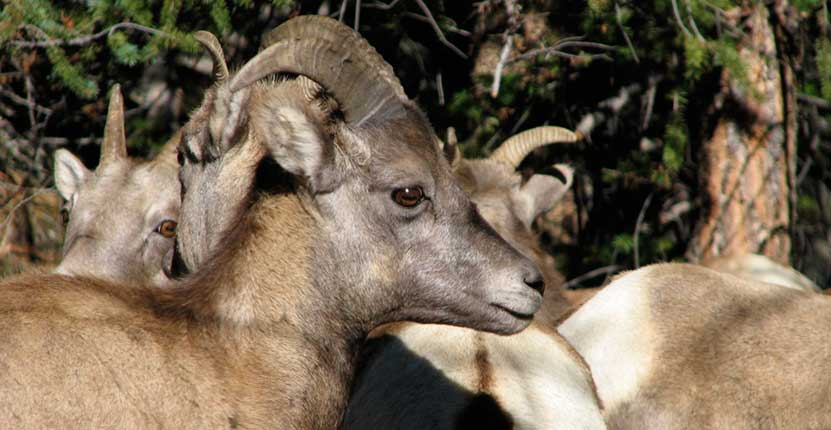
- Dogs are prohibited because of Moose inhabiting this area.
The Scenic Loop Trail is probably the most popular trail at Maroon Bells, and for good reason: the views are incredible, the loop takes you along the cascades of Maroon creek for much of the hike, and wildflowers spring up at your feet along the trail. A lollipop loop is a hike that begins with a straightaway (part of the out & back hike above), which takes you to a loop on the end. The Scenic Trail Loop begins at a footbridge on the far/west end of the lake. A way up the trail, hikers will notice another footbridge on the right. This can be taken to shorten the trip by crossing the creek then turning right to head back to Maroon Lake and the trailhead. However, the loop trail actually goes further and past some exceptionally beautiful cascades before turning back toward Maroon lake.
Trail Option #3 - The Maroon Creek Trail
- Distance: 2.5 or 3.5 Miles - One-Way
- Difficulty: Easy
- Trail Type: One-Way
- Elevation Gain: -870'
- Maroon Creek Lake Trail Map: Map Link
If you are looking for a less crowded option, the Maroon Creek Trail may be the best choice. The Maroon Creek Trail winds downhill alongside Maroon Creek for 3.5 miles. Being near water, the chances of seeing wildlife are pretty good. Maroon Creek Trail begins at Maroon Lake and the trail can be picked up by hiking across the footbridge, turning left, then following the trail down into the valley (away from the Maroon Bells). The trail offers two options.
#1 - 2.5 Mile Hike:
Hikers will encounter and cross a bridge at about 2.5 miles into their hike. At this point, a trail off to the left can be taken across the meadow and up to the road where they can catch the bus back to Aspen Highlands or back to the trailhead. Of course, be mindful of the traffic.
#1 - 3.5 Mile Hike:
The second option is to continue on the trail, cross another bridge, then to stay left onto the East Maroon Trail. This will wind downhill a bit further to another area where you can catch the bus along Maroon Creek Road. As you hike, don't forget to stop occasionally to take in the views behind you of the Maroon Bells.
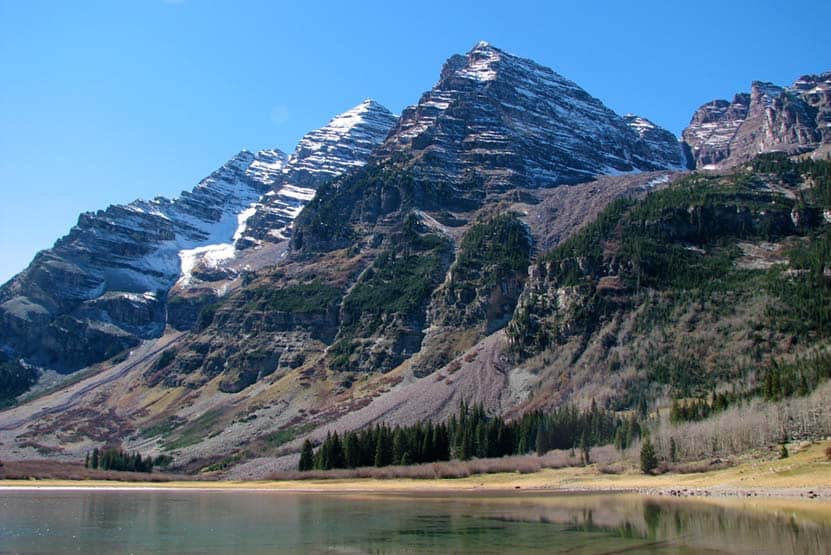
Trail Option #4 - The Crater Lake Trail at Maroon Bells
- Distance: 3.6 Miles Round Trip
- Difficulty: Moderate
- Trail Type: Out & Back
- Elevation Gain: +500'
- Crater Lake Trail Map: Map Link
The Maroon/Snowmass trail (right of lake) will lead hikers through a meadow and to a forest service bulletin board at the far end of the lake. From this point the correct trail is the West Maroon/Crater Lake trail which leads up through meadows, aspens forests, and scree fields. The trail can be extremely rock, so be sure that you have excellent footwear. The trail will split at about 1.7 miles where the correct trail to follow is the West Maroon/Crater Lake Trail. At this point, Crater Lake is not far away. The trail will eventually dip down into a beautiful basin that holds Crater lake and incredible views of the Maroon Bells. Crater Lake is not stocked or fishable as it is a dead lake. It is also an area that has been negatively impacted by heavy use and poor camping practices. Because of this, camping is now prohibited and great care should be exercised to keep human and canine impact to a minimum.
Trail Option #5 - The Willow Lake Trail at Maroon Bells
- Distance: approx. 13 Miles Round Trip
- Difficulty: Difficult
- Trail Type: Out & Back
- Elevation Gain: +3020' to Willow Pass
- Willow Lake Trail Map: Map Link
The Willow Lake trail is demanding and may require an overnight. The trail begins at Maroon Lake and follows the same trails that lead to Crater Lake. At the Crater Lake bulletin board, the trail forks to right and makes its way up through Minnehaha gulch, through alpine meadows and eventually to a trail sign for Maroon-Snowmass/Willow Lake Junction. Here the trail goes to right. Switchbacks lead to top of Willow Pass. After making it over Willow Pass, Willow Lake is a more gradual 1.5 miles further down the trail. This hike is difficult, steep, and more exposed to the regular thunderstorms that form in the afternoons. Camping is prohibited in the meadow near Buckskin Pass, and camping is discouraged at Willow lake. The best option is to camp in the established sites in Minnehaha Gulch.
Get our Dayhikes Near Denver Hiking Guide. It includes our favorite hikes near Denver, packing lists, hiking food and snack ideas, and tips for hiking the Front Range of Colorado.
Photography: How to Get Great Photos of the Maroon Bells
We would like to thank photographer Jerry Blank for the stunning photo of the Maroon Bells at the top of this post. We asked him for a few photography tips and he emphasized the importance of arriving early in order to 1) get a parking spot, and 2) to get a shot of the water before the wind kicks up ripples on the early morning mirror surface of the lakes. More of his photos can be viewed and prints can be ordered from his galleries at this link.
- Fall is the Best Time for Photos: The changing aspens peak in their golden hues during the latter half of September. However, this is just a rule of thumb because much depends on the changing temperature, so it varies from year to year.
- Sunrise Shots are Primo: We all have our best side, and the Maroon Bells' best side faces east. This means that the morning sunrise provides the best opportunity for photos.
- What Time Should I Get There? Earlier than you think. The shoreline of Maroon Lake fills up fast with tripods, so you'll want to get there well before sunrise.
- Dress for the Occasion: Wear your down coat and bring a thermos of hot coffee. The morning breeze and cold temps will conspire to make the wait for sunrise a cold one.
Hiking with Kids at Maroon Bells
- Hydrate: We hike a lot with our kids and it's easy for them to get dehydrated, especially in the dry climate and at high altitude in Colorado. Bring water bottles full of water for everyone.
- Pack Snacks or Bring a Lunch: The drive back to Maroon Bells takes you pretty far out of town and you'll want to stay a while. Bring snacks or a picnic lunch to refuel while you are exploring.
- Choose a Hike with Options: If your children are younger then you may want to begin with the Maroon Lake Trail. If you are still feeling adventurous after that, you could add on all or part of the Scenic Loop. Be aware of Moose and keep your distance from them.
Visiting Maroon Bells From Out-of-State
- Download our Hiking Guide for a list of hiking tips, 10 essentials that everyone should pack for their dayhike, and recommended hiking snacks.
- Take it Easy: Hiking at altitude (almost 2 miles above sea level at the Maroon Bells trailhead) can be really demanding. Choose a trail that matches your physical shape and be prepared to go at a slower pace.
- Don't Drink from Streams or Lakes: There is a misconception that drinking from a mountain stream or lake is the purest water in the world--it's not! Mountain streams and lakes are watering holes for wildlife, especially rodents that carry parasites like giardia and other waterborne infectious diseases that can completely ruin your vacation. All water from these areas should be properly filtered and/or purified.
Camping Near Maroon Bells
There are three established USFS camping areas along Maroon Creek Road on your way in to the Maroon Bells Trailhead. These three are some of the more popular campsites in the state during the summer and fall, so you will want to reserve them well ahead of time. You'll find profiles for the three camping areas below. Reservations can be made at all three campgrounds by calling 1-877-444-6777 or by reserving online at www.recreation.gov
Crater Lake Campground has been closed because of bear activity in the past, so be sure to check to see if it is currently open. However, there are about 20 USFS campgrounds in the White River National Forest area near Aspen. The USFS has a handy camping brochure that can be downloaded at this link.
Silver Bar Campsite
- Driving Directions to Silver Bar Campground: Click for Directions
- Four primitive walk-in campsites only
- Elevation: 8500'
- Drinkable water and toilets, as well as picnic tables and fire-grates are available.
- Five-day camping limit with 2pm checkout.
- Eight-person, two car limit per campsite.
- Pets allowed but must be leashed at all times.
- Reservable Dates: 5/26 - 9/13
- Fees: Camping Fee + Vehicle Fee
Silver Bell Campsite
- Driving Directions to Silver Bell Campground: Click for Directions
- Fourteen campsites
- Elevation: 8350'
- Drinkable water and toilets, as well as picnic tables and firegrates are available.
- Five-day camping limit with 2pm checkout
- Eight-person, two-car limit per campsite.
- Pets allowed but must be leashed at all times
- 30' RV limit
- Reservable Dates: 5/26 - 9/13
- Fees: Camping Fee + Vehicle Fee
Silver Queen Campsite
- Driving Directions to Silver Queen Campground: Click for Directions
- Six campsites
- Elevation: 9100'
- Drinkable water and toilets, as well as picnic tables and firegrates are available.
- Five-day camping limit with 2pm checkout
- Eight-person, two-car limit per campsite.
- Pets allowed but must be leashed at all times
- 30' RV limit
- Reservable Dates: 5/26 - 9/13
- Fees: Camping Fee + Vehicle Fee
Backcountry Camping in the Maroon Bells/Snowmass Wilderness
- Camping is allowed within the Maroon Bells/Snowmass Wilderness area. Be sure to follow all the Wilderness Use Regulations and Practice Leave No Trace principles.
- Camping at the designated spots at Crater Lake is currently allowed, but has been closed in 2014-2015 because of increased bear activity in the area, which is due to poor camping practices. The USFS will close the area again if bear activity becomes problematic.
- Bear canisters are required
- Self-registration required at the trailhead
- Pets allowed but must be on a 6' leash at all times in the wilderness.
Things to Do Near Maroon Bells
- White Water Rafting with Aspen Whitewater Rafting
- Guided Climbing, Hiking, and Mountaineering Trips with Aspen Alpine Guides
- Winter Snowmobile Access to Maroon Bells with T-Lazy-7 Snowmobile Tours
History and Geology of Colorado’s Maroon Bells
The brick red color of the Maroon Bells is created by the oxidation of iron in the ancient sedimentary rock that makes up the mountains. They were formed when ancient granite mountains eroded, then were thrust toward the sky in a later mountain building event. Glaciers then cut valleys and cirque lakes, like Maroon Lake and Crater Lake. The Maroon Bells are considered Colorado Fourteeners with North Maroon at 14,014' and the summit of South Maroon Peak at 14,156'. They are called "the bells" because the shape of the mountains resemble church bells. The surrounding Maroon Bells-Snowmass Wilderness area was one of the first US Wilderness areas established in 1964. The ruins of mine riddle the landscape from the silver mining activity of the late 1800's.
The sedimentary siltstone that makes up the Maroon Bells and nearby mountains, like Pyramid Peak, makes them very dangerous to climb. It's described by climbers as "rotten" rock and very unstable. In fact, in 1965 there were five different climbing accidents on the Maroon Bells, taking the lives of eight climbers. This gave the Maroon Bells the new monicker, the "Deadly Bells". There are yearly accidents and usually deaths on the Bells. Because of this, we recommend that those contemplating an ascent of the Maroon Bells should contact a professional guiding service.
How You Can Protect the Maroon Bells Area
- Camp in Designated Spots: Camping has been prohibited at many of the high-mountain lakes in the Maroon Bells-Snowmass area in order to protect these overused and highly impacted environs. The USFS has inventoried over 700 campsites, that have impacted the equivalent of 35 football fields of land. So, be sure to use established camping areas in both the wilderness and along Maroon Creek road.
- Keep Out of the Water: People and Dogs can greatly disturb fragile ecosystems in streams and lakes because of detergents and oils on our clothing and skin. The water sources around Maroon Bells are at a much higher risk because of the sheer volume of hiker and backpacker traffic.
- Keep Dogs on a 6' Leash: I have regularly hiked with my dog for years, and have often let her off the leash. But in the last few years, I've become much more aware that man's best friend has a significant impact on the wildlife that make our wilderness areas their home. Even in areas that don't require leashes, I now leash our dog. As much as you would love for your dog to run free, it's important to remember that both we and our dogs are guests in this place and we want to leave the least amount of impact possible. Of course, this is a 6' leash required area. The Ranger District is now giving special attention to unleashed dogs and writing tickets.
- Pack Out All Trash: It should probably go without saying, but be sure to pack out your trash, including both human and dog waste. In 2015 alone, forest rangers packed out over 500 pounds of trash left by visitors to the Maroon Bells-Snowmass area.
Weather
Buffalo Creek Falls at Wellington Lake
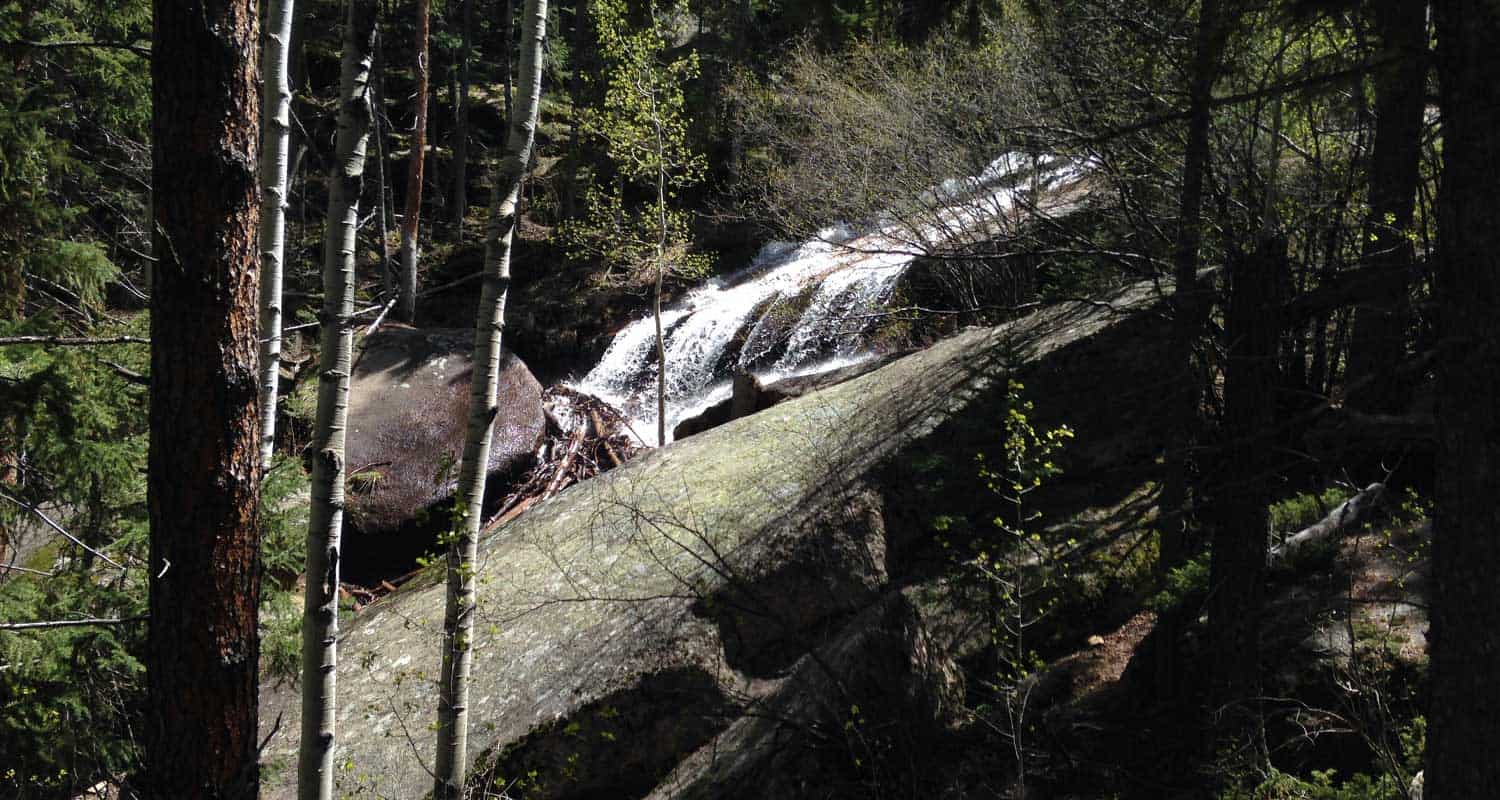
This waterfall isn't even on the map, and it's become my favorite waterfall hike near Denver. In fact, this is the only post that I'm tempted to keep to myself, because not only is there great hiking, but Wellington Lake may be the best camping spot within 90 minutes of Denver.
There is a hitch though: it's a privately held recreation area and requires a day-use fee of $14 per adult (age 13+) and a fee of $6 fee per child. Fees have gone up so, (depending on the size of your party) it probably makes more sense to pay the camping fee, stay for at least one night, and make the waterfall hike a part of your adventure. Explore the full trail profile below for this beautiful waterfall hike near Denver.
Trail Snapshot: Buffalo Creek Falls at Wellington Lake
| Hike Distance | 0.5 mile RT |
|---|---|
| Difficulty | Easy |
| Duration | approx. 30 minutes |
| Trail Type | Out and Back |
| Elevation Gain | Approx. +500' |
| Seasons | Year Round |
| Dogs | Allowed On Leash |
| Hike Trail Map | Click for a Map of Buffalo Creek Falls |
| Denver Drive Time | 1 hr 45 min |
| Directions | Click for Google Map |
| Town Nearest Hike | Bailey, Colorado |
| Beauty | Waterfall, Lake, Castle Mountain, Osprey, Waterfowl |
| Activities | Hiking, camping, boating (non-motorized), fishing |
| Fee | 14$ per adult, 6$ per child ages 6-12. See Castle Mountain Rec site for up-to-date fees |
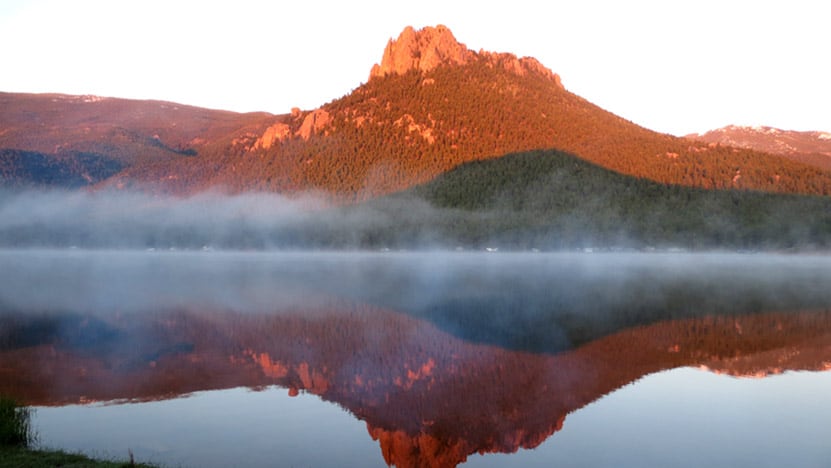
You'll find Buffalo Creek Falls at the backside of Lake Wellington and just under the shadow of The Castle, a granite mountain that rises off the lake and is named--you guessed it--because it looks like a fortress. Read on to get a detailed set of driving directions, a description of Buffalo Creek Falls, places to explore beyond the falls, and some details on camping at Wellington Lake.
Driving Directions to the Trailhead:
You'll drive 285 to Bailey, then hang a left onto 68/Wellington Lake Road. 68 is a dirt road and relatively smooth. Still, rain can change things in an instant, so we advise being alert for potholes and washboard. When you arrive at the lake, pull up to the office building, and pay your day-use fee. We have been incredibly impressed by the folks who work here, they are hospitable and kind. If you decide to camp, this is where you pay your campsite fees and get firewood. Put the day-use tag in your car where it's visible, then take the road around the lake. Be aware of kids running and playing because the road runs right through the campground. The Google maps provided in this post only go about halfway around the lake. You'll want to continue further, all the way to the scout camp, and that's where you'll find the large dirt parking area and the trailhead.
The Hike to Buffalo Creek Falls
My friend Matt and I took our two 4 1/2-year-old daughters with us on this hike and they did great. Look for the trailhead that begins just to the left of the Scout Camp sign. It's been raining almost every day this year (2015) so there was a lot of mud and puddles at the start. This gives way to a trail that climbs about 400 yards or less up to the base of the falls.
Here, at the bottom of the waterfall, the creek spills itself into a fan of cascades. Look for the trail that runs to your right and goes to a falls overlook bridge. The trail and steps are in need of some repair, but it's a short jaunt to the top. The waterfall is really unique. It's a shelf waterfall, but the water, over time, has scalloped out the rock to create ripples. So, when the water is really flowing, such as in early Summer or after a good rain, the waterfall creates a spray of waves. It's not enormous or breathtaking, but it's got a really unusual character about it. Watch the video to see what I'm trying to describe with words that an image can better tell. In my opinion, it's much better than Maxwell Falls, which is probably the most popular waterfall hiking destination near Denver.
But the waterfall isn't even the best part. The creek above the falls is nothing but cascade after cascade. I scrambled around and explored about 100 yards further up South Buffalo Creek and found some shallow caves and hidden spots with pools and miniatures falls. I'm looking forward to going back to hike the creek as far as I can manage, possibly all the way to the ridgeline. I should make a few of recommendations at this point: 1) hike on durable areas to prevent erosion, 2) it's an easy place to slip and twist an ankle, so wear good shoes or boots and be mindful, and 3) pick up any trash you see and pack it out with you.
Finally, it's important to note that this waterfall will likely be a trickle by midsummer. The best time to go will we mid-May through July 1. However, it should also be a great midsummer after a good rain.
Camping at Wellington Lake
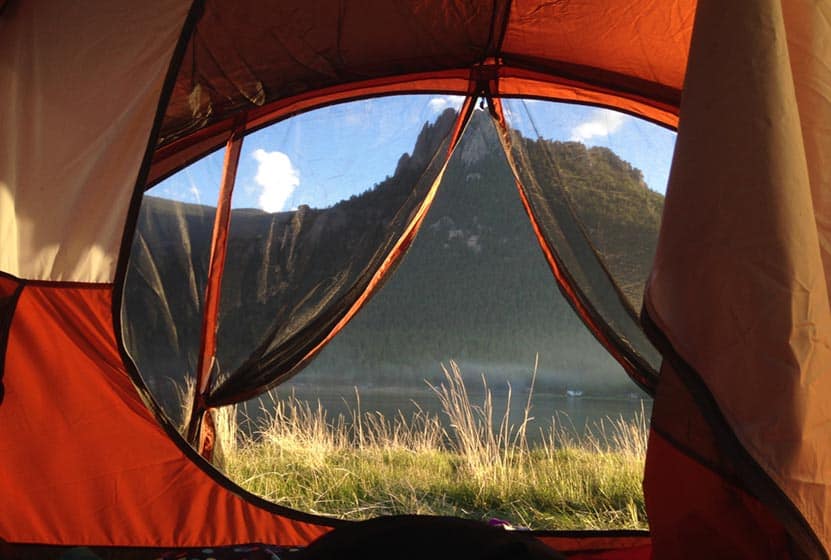
There are 75 camping sites at Wellington Lake, including group sites, and many of them right on the shore. You can camp with everything from tents to larger RVs, though it depends on the site you pick. To make sure you will have enough room at a particular site, be sure to give Castle Mountain Rec a call at 303.838.5496 before you book online. We love this place because we can paddleboard, fish, the kids catch minnows and crawdads, and there more hikes beyond the waterfall hike. We even watched an osprey dive into the water and snag a fish from the lake. There are restrooms, water sources, but no showers and no cell service (but that's why you're camping).
Tips & Resources for Hiking Buffalo Creek Falls:
- You've Got to Camp Here: You can book your campsite online at the Castle Mountain Recreation Reservation Page. This place packs out in the Summer, so make your reservations early. There are also First Come, First Served sites.
- Dogs: If you bring your dog on this hike, be sure to keep them on a leash. If they get out on the rock, it's slick, and they can tumble into the cascades. We heard a story of a dog getting swept away down the falls. Of course, the same thing can be said for children. Well, you don't need them on a leash, but keep a close eye on them around the steep and slick terrain around the waterfall.
- Trail Map for Buffalo Creek Falls Trailhead: Trail Map Link
- Colorado Road Conditions: Colorado Road Conditions
- After the Hike: Crow Hill Cafe, Bailey, Colorado
Weather
Map & Driving Directions
Click for Driving Directions
Georgetown Railroad Hike & Train Ride
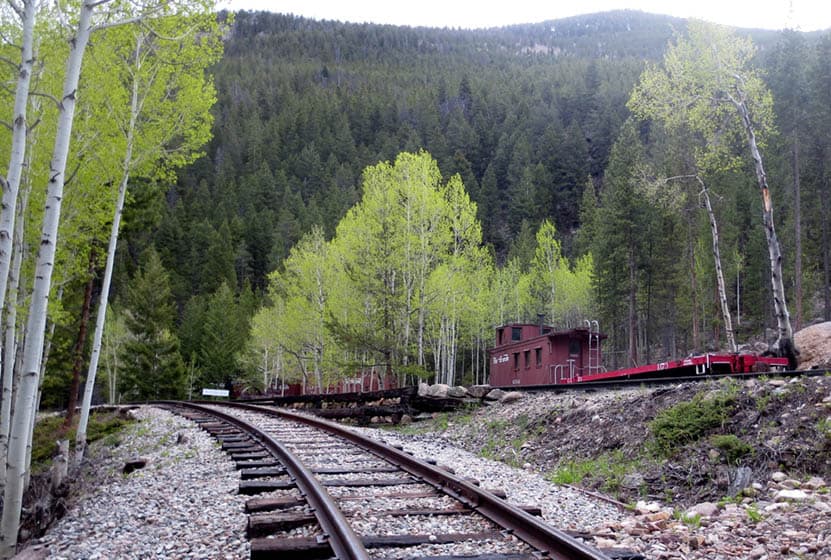
After the hike, I asked our 7 year-old daughter what she thought of it. Her reply said it all, “Dad, it was awesome!” Here favorite parts were the fairy pond, a small, moss-rimmed pool probably created by miners long ago to hold drinking water, and the gleaming minerals in the rocks she picked up along the trail. I enjoyed the history and stories told by our guide, Kelsey, who had a particular love for the town and people of Georgetown and Silver Plume. This not your typical Dayhike Near Denver because it's actually a guided historic tour meets hike, plus a train ride on a vintage train back to the trailhead. Read below for all the details for this reservation-required hiking tour.
Trail Snapshot: Georgetown Railroad Hike & Train Ride
| Hike Distance | 2.3 Miles |
|---|---|
| Difficulty | Easy |
| Duration | Approx. 3 hr Guided Tour |
| Trail Type | One Way with Return on Train |
| Elevation Gain | -750′ |
| Seasons | May-September |
| Dogs | Not Allowed |
| Railroad History | Click for Georgetown Railroad Site |
| Denver Drive Time | 1 hr |
| Directions | Click for Google Map |
| Town Nearest Hike | Silver Plume, Colorado |
| Beauty | Steam Engine Trains, Old Mining Ruines, Clear Creek, History, and Geology |
| Activities | Hiking, Train Ride, and Lunch Provided |
| Fee | This is a guided tour hike and reservations are required. See the Schedule & Fares Page for the most up to date information.Lunch is included. |
The Georgetown Railroad hike is a one-of-a-kind guided hike through the clear creek valley, a landscape decorated by the rich history of the Colorado Gold Rush of 1859. If you take just a moment to scan the mountainsides along interstate 70, you'll notice the yellow-stained tailings of abandoned gold mines. This hike takes you right through the very heart of that forgotten territory. We got to take a sneak-peek of the trail before it opened, so I brought our 7 year old daughter with me for our date-night, and she loved it.
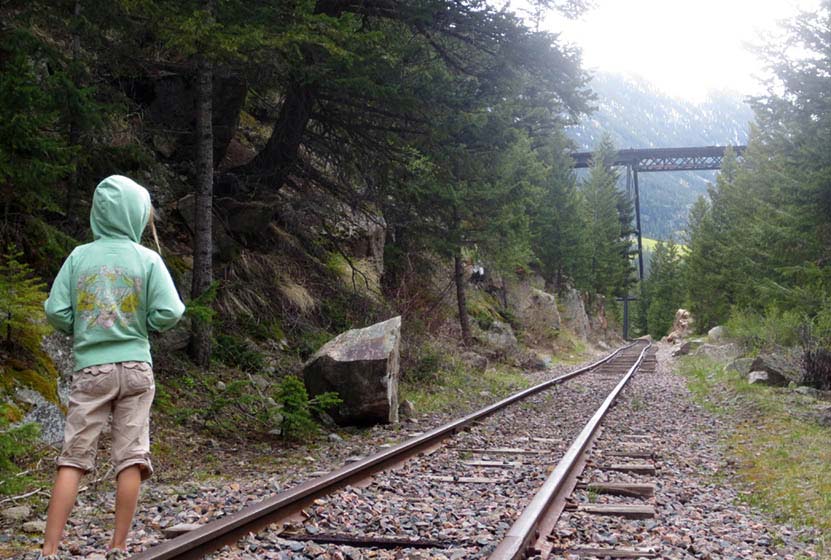
The hike begins in Silver Plume, Colorado at the historical railroad station and museum. On the hike you'll have one to two guides who accompany your party. Groups are typically about 10 hikers. The hike begins on a nondescript gravel road, but soon enters an old, overgrown cemetery. From the graveyard, the trail descends into a healthy stand of lodgepole pines. We could see mist in the valley below, and the sound of the train in the distance. Though the sounds of interstate 70 are not far away, it's like stepping back in time. The hummingbirds zooming past us, and the rapids of Clear Creek below us brought the valley alive.
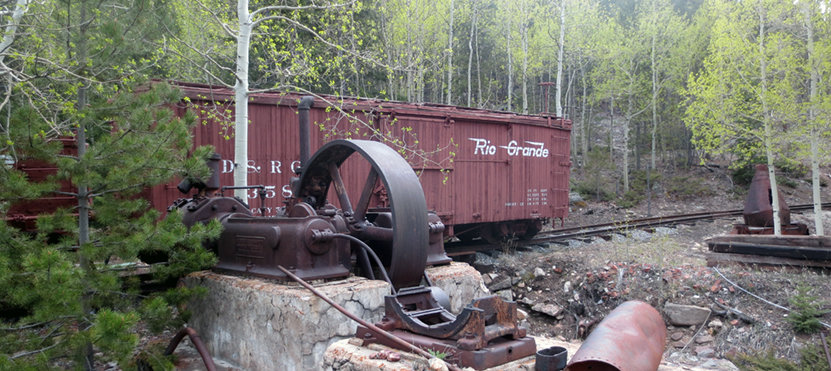
The best sounds, however, came from the steam train in the valley below. Kids will love this. It's a unique experience to be on a hike, then to watch a train pass in front of you, below you, and even above you on the tracks. And it creates anticipation of the train ride back.
The hike itself is quite easy and could be done in about 45 minutes--if it was all about speed. But the destination for the Georgetown Railroad hike is the entire journey. Our tour guide pointed out old claim markers from the 1800's, the remains of mining equipment, barrels, and tin buckets tucked away in the woods. She told stories, and showed us things we would have missed just hiking through. At roughly halfway through the hike, you'll stop for lunch (lunch is provided) in a grove of aspens that has a great story of its own. Keep your eyes peeled for the foxes and deer that frequent this part of the valley floor.
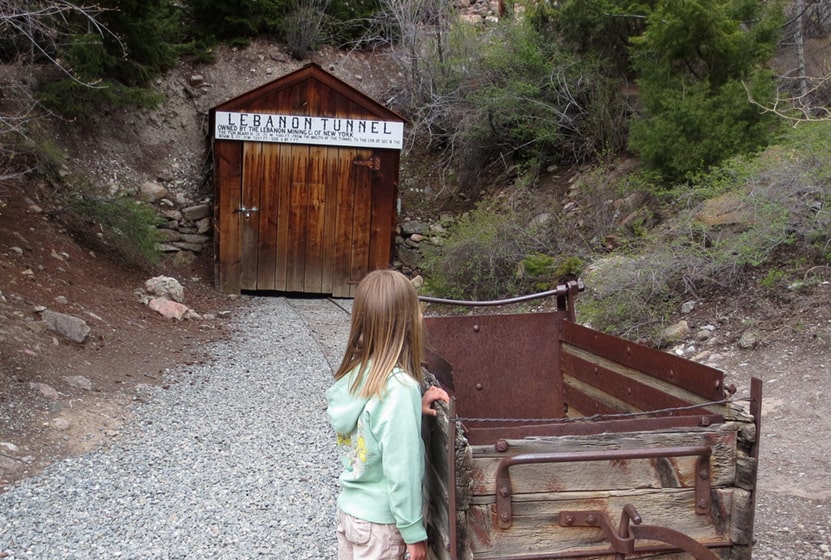
My daughter was captivated by the gleaming biotite and muscovite in the rocks alongside the trail. Our guide picked some special ones out for her to take home. After lunch, you'll hike by the Hall Tunnel, and the old Lebanon mine. Crossing the tracks, then following inactive segments, you'll make your way down into Georgetown. The trail leads under the the Devil's Gate High Bridge and ends at the Devil's Gate Station--named such because of the way the wind howls through this part of the valley.
Just when you think the fun is over, you get a 30-45 minute train ride back to your car in Silver Plume.
Tips & Resources for the Georgetown Railroad Hike & Train Ride:
- Call Ahead to book Your Hiking Tour: 1-888-456-6777
- Great for Kids: I would guess that the youngest age to take on this hike would be 6 years old, but it really depends on the child. Our daughter is pretty rough-and-tumble. The pace is right, and their are a lot of things to keep their attention.
- Supervise Kids on the Tracks: Kids will want to run fast down the railroad tracks, but the ties prove to be pretty uneven ground. Our 7 year old daughter tripped and got a little scrape on her knee, but was fine. Your guide will give you safety tips, but they will also be very engaged in giving you the tour.
- Restrooms: There are restrooms about 1/2 way through the hike at the Lebanon mine site.
- It's a Hike: I'd classify this as an easy hike, but there are some segments where the trail is steep and runs through soft gravel, where it's easy to slip. While it's a guided tour, it's not a bike path--it's still a hike.
- Footwear: Wear close-toed shoes. Boots are not necessary, but I'd recommend something that laces up.
- Colorado Road Conditions: Colorado Road Conditions
- After the Hike: The Alpine Restaurant & Bar in Georgetown
Weather
Map & Driving Directions
Click for Driving Directions
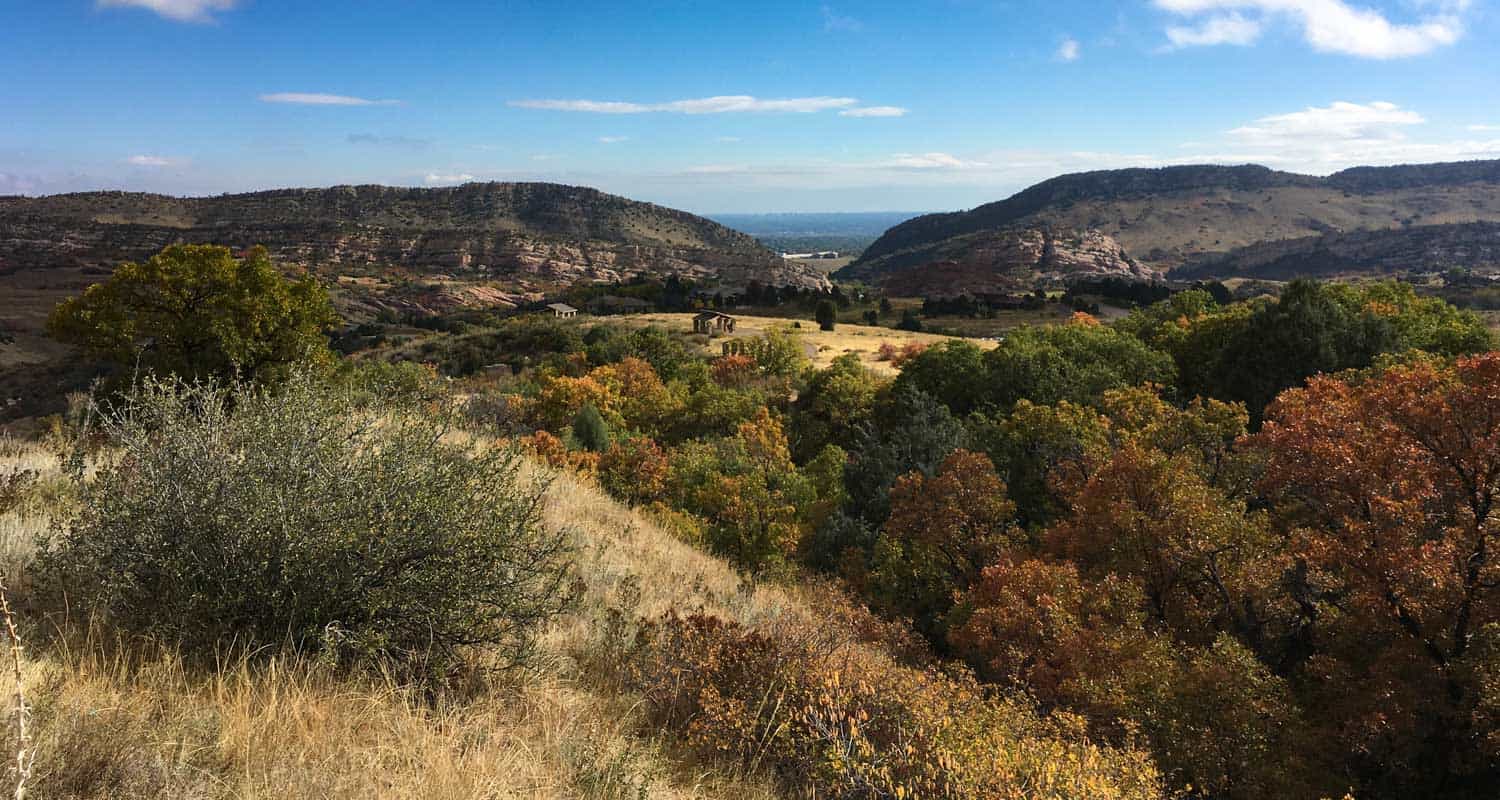
Deer Creek Canyon Loop Hike
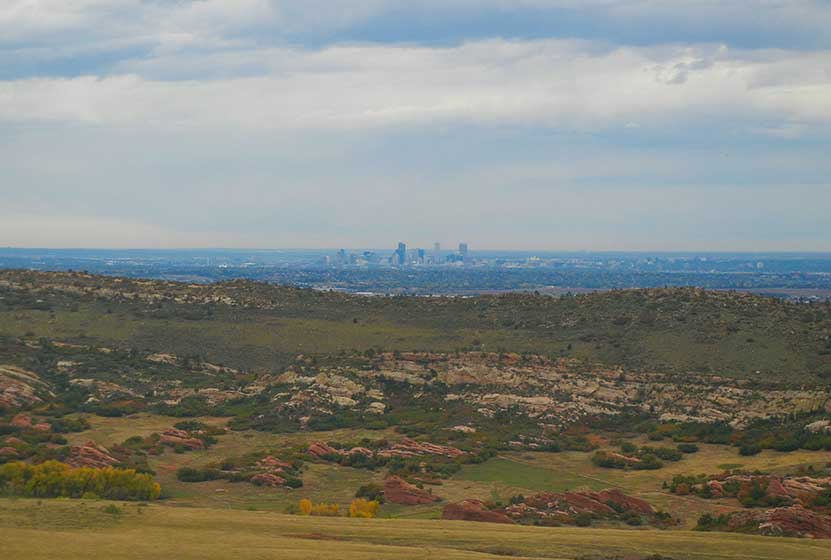
This loop hike in Deer Creek Canyon offers a quick getaway from the city of Denver and its surrounding suburbs. Because Deer Creek Canyon Park is tucked away in the entrance of the canyon, you can completely immerse yourself in the foothills and the valley that lies between Littleton and the park.
Trail Snapshot: Deer Creek Canyon Loop Trail
| Hike Distance | 2.7 miles RT |
|---|---|
| Difficulty | Easy |
| Duration | Approx 2 hr |
| Trail Type | Loop |
| Elevation Gain | +500′ |
| Seasons | All Year |
| Dogs | Allowed on Leash |
| Hike Trail Map | Click for a Map of Deer Creek Canyon Park |
| Denver Drive Time | 35 min |
| Directions | Click for Google Map |
| Town Nearest Hike | Littleton, Colorado |
| Beauty | Fall colors, quick escape from Denver, beautiful valley, rock formations |
| Activities | Hiking, great picnic facilities, mountain biking, horseback riding |
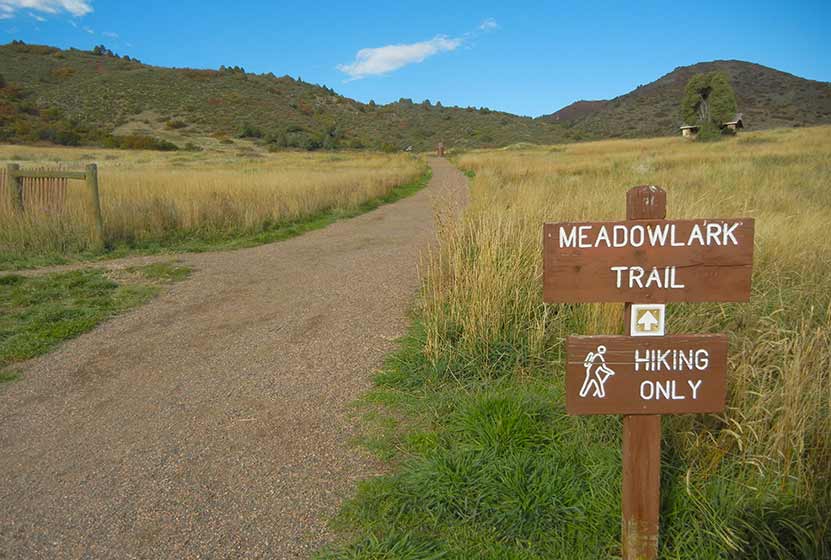
Deer Creek Canyon Loop Trail Profile
This 2.7 mile loop hike in Deer Creek Canyon is made by combining two trails. The Route: Start on the Meadowlark Trail (1.6 mile trail) until you come to the Plymouth Creek Trail junction. Go left onto the Plymouth Creek Trail for 1.1 miles back to the trailhead.
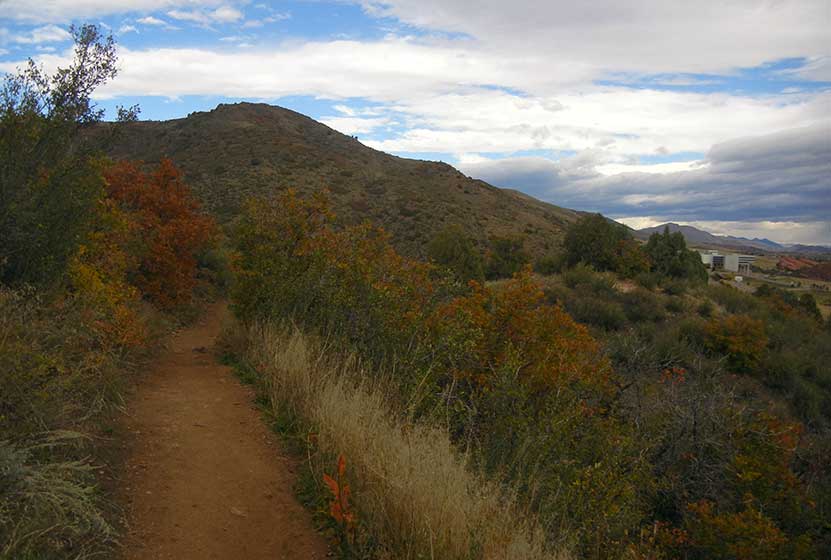
This hike is relatively easy, characterized by mostly gentle slopes and a very few rock scrambles. It's perfect for kids, and older outdoor enthusiasts. Pathfinder, Joe Q., scouted this hike for Dayhikes Near Denver and went about a week too late to catch the peak of the fall colors; however, as he reported, "Even when I went the array of reds, oranges, and yellows were a great exemplification of Colorado’s fall beauty."
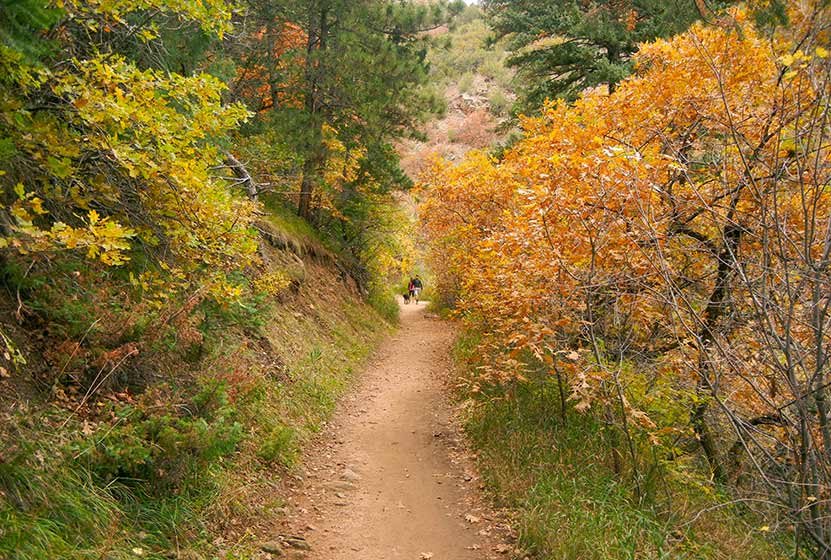
The Meadowlark Trail is a hiker only trail, however, the Plymouth Creek trail does allow mountain bikes. As you hike, you'll encounter some faint side-trails where people choose to depart from the true trail to see a new vista view or viewpoint. These are pretty clearly not trails and will end within 100 feet. If you are ever questioning whether or not you’re on the true trail, you probably aren’t. The true trail is very well worn, well maintained, and is pretty obvious.
The Plymouth Creek Trail follows the creek for a while, and gives lots of views to small cliff walls on either side. In the lower portions of Plymouth Creek the trail runs adjacent to private residences, but the trail remains clearly marked.
Tips & Resources for Hiking Deer Creek Canyon Loop:
- Parking at Deer Creek Canyon: There is ample parking, but it's possible that the lot could fill up on holidays and weekends.
- Getting There: GPS may give you incorrect directions to the trailhead. If you are traveling westbound on Deer Creek Canyon road, turn left on Grizzly; you'll find the Deer Creek Canyon Park Trailhead on your right.
- Rattlesnakes: There is a higher than usual presence of rattlesnakes in the lower regions of Deer Creek Canyon Park. Rattlesnakes are a normal inhabitant of the foothills and plains along the front range, but some areas--like this on--may have higher concentrations. They tend to sun themselves on rock and the warm gravel of trails--so keep your eyes peeled as you hike.
- After the Hike: Spur Coffee in Littleton
- Road Conditions: Colorado Road Conditions
- Thanks goes out to Joe Q. who hiked this loop, and took the trail notes and photos to produce this trail profile.
Weather
Map & Driving Directions
Click for Driving Directions
Guide for Hiking Hanging Lake in Colorado
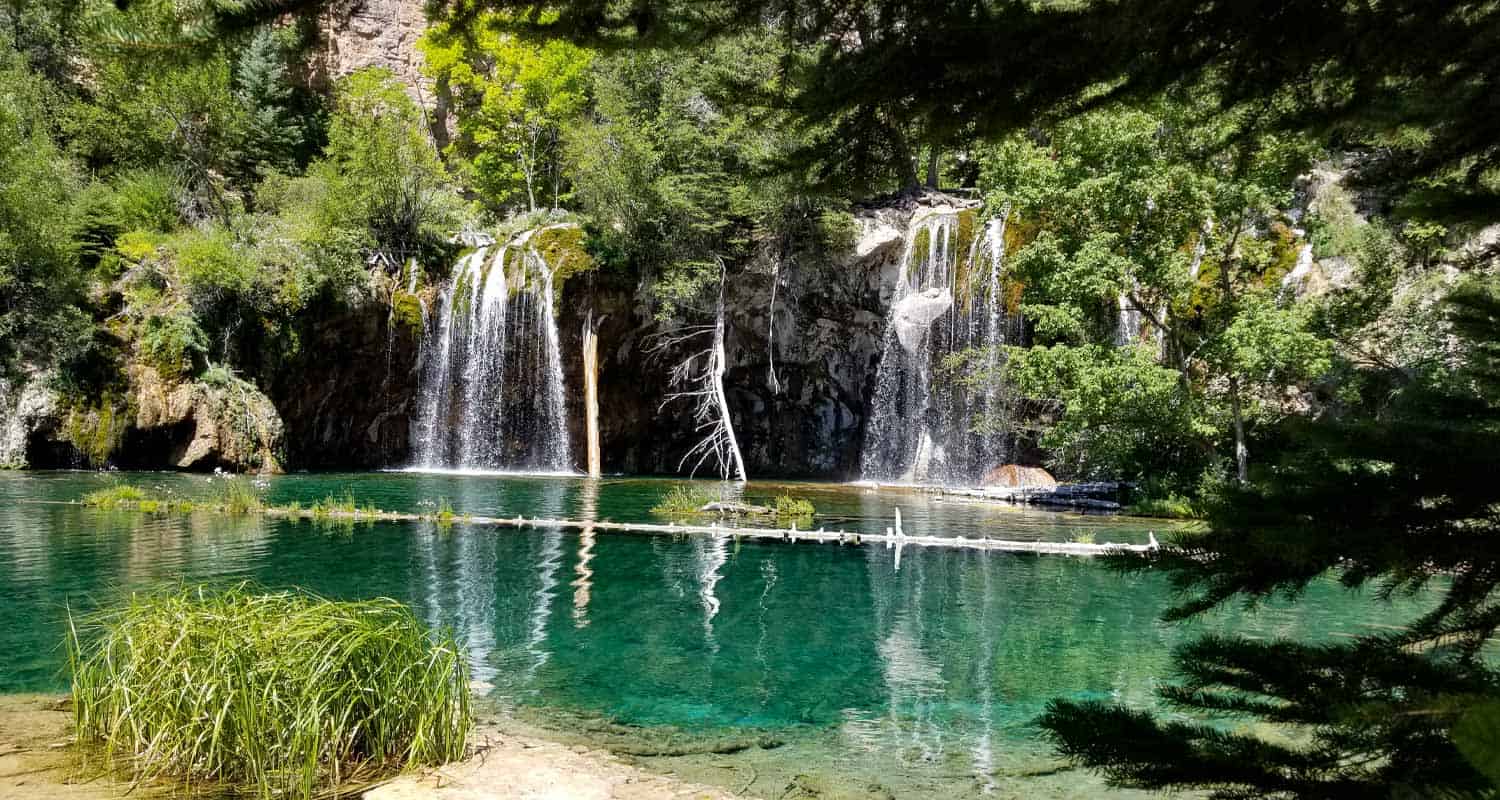
Hanging Lake is a short hike to two waterfalls and one of the most beautiful lakes in Colorado. On the same hike, you can explore Spouting Rock Falls, and even walk behind the waterfall. Reservations are required to hike Hanging Lake so don't leave home without booking (see info in trail snapshot below). It’s not a day hike near Denver, but it’s definitely worth the nearly three-hour drive to the Hanging Lake Trailhead just outside of Glenwood Springs.
We've attempted to create the definitive guide to hiking the Hanging Lake Trail. In this guide, you'll find: how to make reservations for hiking hanging lake, 10 hiking tips, notes on driving directions to Hanging Lake. You can download the Hanging Lake trail map, find tips on photography at the lake, and some notes on hiking this trail with kids. If you are planning a Colorado vacation, there is helpful information for planning both your hike and trip to this Colorado destination. This guide is extensive, so we have created a table of contents help you navigate your way around.
Hanging Lake Guide Contents
- Trail Snapshot
- Reservations and Permits
- Driving Directions
- Parking & Trailhead
- Hiking the Trail
- At Hanging Lake
- Spouting Rock Falls
- Photography
- Hiking Hanging Lake with Kids
- For Out-of-State Hikers
- Ten Hiking Tips
- Fishing Prohibited
- Dogs Prohibited
- Camping Nearby
- Lodging Nearby
- Things to Do Nearby
- Proposing at Hanging Lake
- History and Geology of Hanging Lake
Trail Snapshot: Hanging Lake Trail
| Permit Required | Visit Link for Reservations |
|---|---|
| Hike Distance | 2.4 miles Round Trip |
| Difficulty | Moderate to Difficult |
| Duration | Approx 2 hr Round Trip |
| Trail Type | Out and Back |
| Elevation Gain | +1096', -160' |
| Seasons | All Year |
| Dogs | Dogs are Prohibited on Hanginng Lake Trail |
| Hanging Lake Trail Map | Click for a Map of Hanging Lake |
| Denver Drive Time | 2 hr 45 min |
| Hanging Lake Driving Directions - Off Peak Season Parking | Click for Google Map |
| Town Nearest Hike | Glenwood Springs, Colorado |
| Beauty | Waterfalls, Lake, Cascades, and Canyon |
| Activities | Falls Viewing Area, Hiking |
| Video | Click For a Video of Hanging Lake |
Hanging Lake Reservations
Reservations are required to hike Hanging Lake. You can purchase your permit and schedule your reservation slot online at https://visitglenwood.com/hanginglake/
You might be wondering why reservations are necessary? The trail receives over 100,000 visitors each year, which is common for some areas in the National Parks system, but there are two other factors at play: first, hanging lake is a sensitive area and because of the sheer volume of visitors, the ecosystem was becoming threatened by the impact; second, the trailhead parking area is in a canyon alongside interstate 70, so it would be incredibly difficult and expensive to expand the parking and trailhead facilities. Not to mention that by expanding, we would end up expanding the problem of impact. In short, Hanging Lake was getting loved to death. Then, in 2020 the Grizzly Creek Fire burned through the area that required repairs before reopening the trai. The city of Glenwood Springs and the Forest Service have teamed up to preserve this natural wonder, so that future generations will get to enjoy it, too.
Hanging Lake Driving Directions
Driving to Hanging Lake from Denver (the east) can be a bit confusing. Here’s why: you have to drive past the trailhead because there is no westbound exit, then take exit #121, go under interstate 70 and get back on eastbound I-70. Then you’ll take exit #125 to the Hanging lake Trailhead. I’ve posted a map below that shows all this in detail.
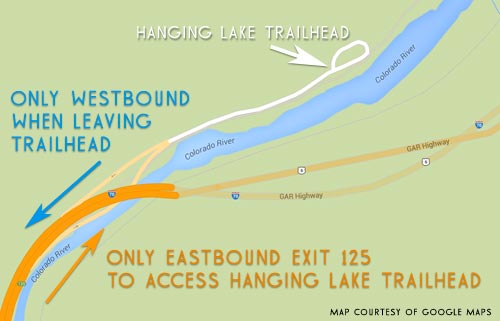
When leaving the Hanging Lake Trailhead, you can only exit onto the Westbound lane of interstate 70. So, you’ll have to do the same thing and take exit 121 again to double-back and head back to Denver. If you are coming from Glenwood Springs or the west, then things are pretty straightforward. Driving from Denver, this maps out as a 2.5 hour drive using Google maps, but be sure to add time for construction.
Parking and Facilities at Hanging Lake Trailhead
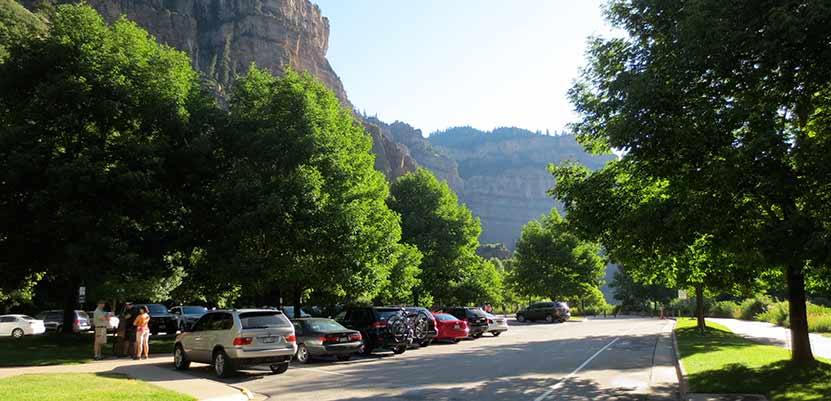
We arrived at the Hanging Lake Trailhead parking lot at 8AM on a Saturday morning in July. The first parking lot was full, and by 8:30, the second lot was nearly full. Beginning in 2015, a gate has been installed to close the lot when it is full. The restroom facilities were large enough to serve the number of people who frequent this popular Colorado hike, and were well kept. This is important: if you get there when the lot is full, you will either need to try again later, or make other plans. An alternative is to rent bikes in Glenwood Springs, to bike in, and lock up your bikes at the trailhead (be sure to get locks at the rental shop).
There were a few shaded picnic areas near the parking area, and some unshaded ones along the river. On our way out, the parking lot was at full capacity with cars having to turn around and leave because there was no place to park. Parking is prohibited along the the I-70 exit ramp, so if the parking lot is full, your best bet is to drive into Glenwood Springs, grab something to eat, and try back later. Don't wait idling or clog the ramp, it prevents emergency vehicles from accessing folks who really need their help. It's also important to note that recreational vehicles and trailers are prohibited from parking at the hanging lake parking lots as there is not sufficient space to turn around.
Hiking the Hanging Lake Trail
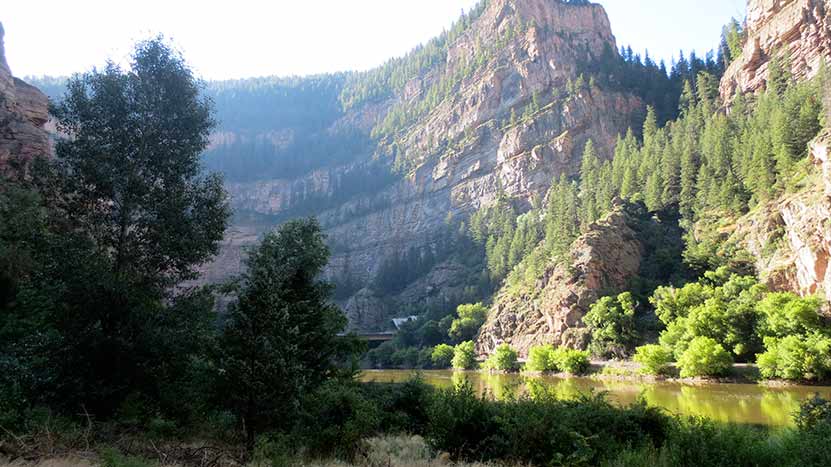
The Trailhead begins along the Colorado River with a paved bike path surrounded by the banded rock walls of Glenwood Canyon. The morning air was cool, and steam was lifting from the warm surface of the Colorado River. After about a quarter-mile you’ll see a bike rack and the Hanging Lake Trail on your left. This is the beginning of Dead Horse Creek Canyon, the canyon that you’ll follow for about 1 mile up to Hanging Lake, then to Spouting Rock Falls.
Depending on your pace, it may take you anywhere from 40 minutes to an hour and a half to get to the top.Though the prize at the end of this hike are two breathtaking Colorado waterfalls, one of our favorite features of the Hanging Lake trail is that it follows and crosses a mountain stream all the way up to the lake. In fact you’ll cross seven bridges on your journey up to Hanging Lake. You’ll be refreshed by the sights and sounds of cascades and the cool air of the canyon.
Most of the hike is in the shade of towering spruce, cedar, and fir trees. You’ll find several benches and rocks where you can stop and rest. If you are acclimated to the altitude, the hike up the Hanging Lake is relatively easy and short, but it is steep and there are a lot of rocks to negotiate, so we have categorized the Hanging Lake trail as a moderate hike.
If you are not acclimated to the altitude, or not a regular hiker, this Colorado hike will be a real workout, so you may classify it as difficult. If this is you, then be sure to read our Tips for For Out-of-State Hikers. The piece you may find most challenging is just how slippery some of the rock can get. I hiked this in Chaco sandals, which had great grip, but I got a few blisters on the descent. I’d recommend wearing a shoe or a boot that you know won’t be prone to slipping.The piece you may find most challenging is just how slippery some of the rock can get. I’d recommend wearing a shoe or a boot that you know won’t be prone to slipping.
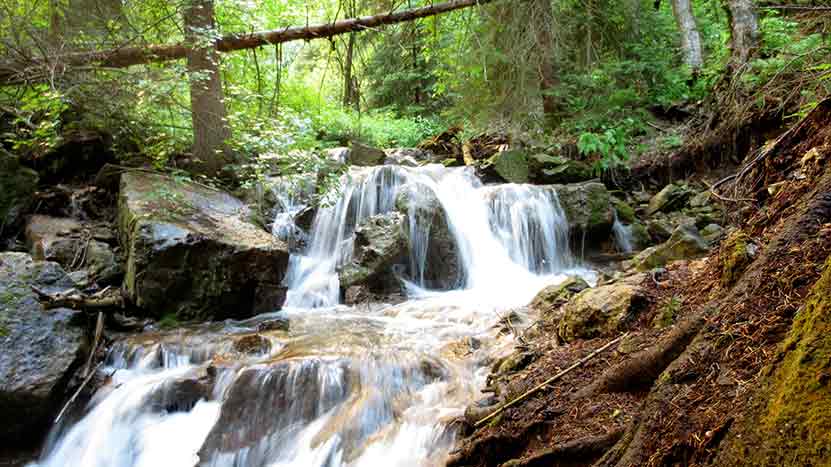
At bridge three you’ll come across a beautiful cascade. The canyon soon opens to display clifftops that look like the ancient ruins of some abandoned castle. In areas where the sunlight breaks through, you may find raspberries along the trail in the latter half of the Summer. You’ll find more cascades near bridge number five. Dead Horse Canyon is a particularly lush ecosystem packed with spruce trees, moss, lichen, ferns, and sweet woodruff. As our six-year old daughter hiked into this part of the trail, she looked up to me and said, “It’s a rainforest, Dad!”
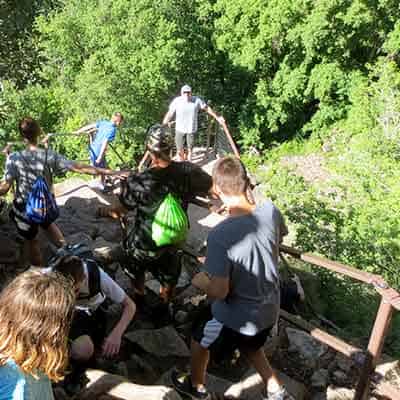
Close to the one-mile point, you’ll climb a steep staircase of rock complete with handrails. While the handrails are helpful, it would be easy for a child to slip over one.So, we’d recommend that you keep smaller children on the inside of the steps as you ascend and hold their hand. It’s a sheer drop on the other side of the handrail.At the top of the stairs follow the path about 100 yards to Hanging Lake. On the way, just before Hanging Lake, you’ll notice a sign to Spouting Rock. We’ll detail this trail in a moment, but you absolutely must hike this short 200 yard trail to this waterfall hidden behind Hanging Lake.
At Hanging Lake
Hanging Lake is a masterpiece of the natural world. You could spend the entire morning staring into its waters and discovering new things. We spotted trout in its green and blue waters, and dippers, little birds that create nests right on the rocks along the water. There are a variety of moss, ferns, and wildflowers all along the lake. Because of all the traffic at the lake, we saw a bit of trash floating at the base of the waterfall. Dayhikes Near Denver would like to challenge you to look for a piece of trash at the lake and to pack it out with you. Of course, don't go in for it, but pick up what is along the trail and edge of the lake. If we all do this, we can do a little part to help keep this natural wonder beautiful. With over 130,000 people visiting a year, the impact adds up fast.
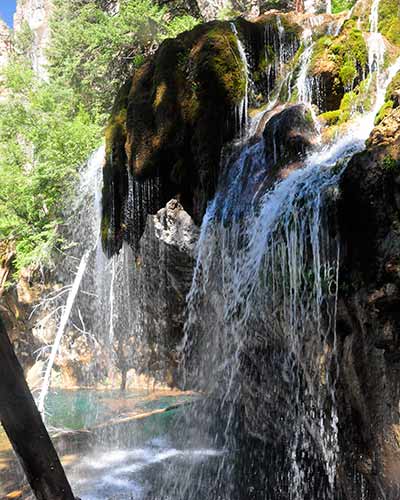
The back side of Hanging Lake was my favorite spot. The light play and the water spray made for great photos (see our photographing hanging lake tips below), and it gives you a real stunning perspective of the waterfalls pouring into the lake.
You may notice what looks like a huge chain-link cage along the canyon wall above Hanging Lake. It’s there to hold back the rocks that are prone to pile up and roll downhill toward the lake.
Stay off the Log
There is a log that stretches out into the lake, and its tempting to walk out onto it. However, it’s important to know that the oils and detergents on our bodies and clothing--even our shoes just touching the water--can damage the sensitive ecosystem of Hanging Lake. So, as cool as it might be to get that pic of you out on the log, it’s even cooler to help preserve this place for the next generation who gets to see it.
So, as cool as it might be to get that pic of you out on the log, it’s even cooler to help preserve this place for the next generation who gets to see it.
Spouting Rock Waterfalls
On your return, be sure to hike the short spur (about 200 yards) up to Spouting Rock Falls. That’s right, it’s plural--there are multiple falls. This set of waterfalls is much higher than the Bridal Veil falls at Hanging Lake, and instead of pouring over the cliffside, the falls shoot out from holes that the water has carved through a sheer wall of limestone. When the water is really flowing (which is most of the time), an additional gusher of a falls spills out from the heights above Spouting Rock, creating a breathtaking series of waterfalls.
Photography: How to Get Great Photos of Hanging Lake
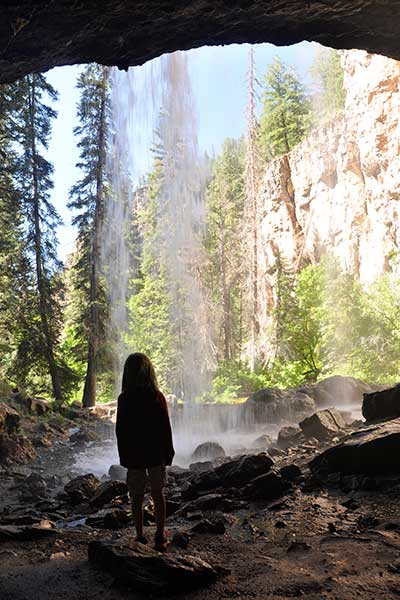
The key to getting the best photos of Hanging Lake is to go very early or later in the afternoon when the sun is close to setting. We hit the trail around 8:30 AM, and by the time we got to the lake, there was direct sun on the waterfalls pouring into Hanging Lake.
The real problem is that part of the waterfalls and lake are in direct sun and part in in the shadow of the canyon walls. This makes for two very different exposures within the same frame. So, that’s why we recommend that you go earlier or much later when the sunlight is still indirect and diffused. For some incredible shots, be sure to walk over to the back side of hanging lake where you can take photos that reveal the area carved out under the falls--but be sure to keep out of the water.
You will find the light at Spouting Rock Falls much more forgiving. Spouting rock is shaded more by both the canyon walls and trees that surround it. However, I would expect that light might be a bit harsh around midday.
Hiking with Kids at Hanging Lake
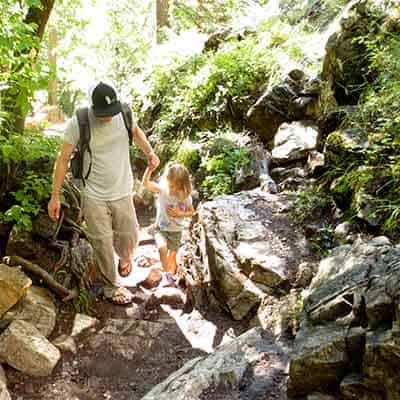
The trail is steep and the rock steps are high, so if you are bringing your kids, be prepared to hike at a slower pace and for a lot of people to be passing you. Be aware that there is a lot of slippery rock along the trail, so both good hiking shoes with grip and close supervision of kiddos are important. We brought our 4-year old and 6-year old with us and they did fine. Take into account that we have been hiking with our kids since they were a few weeks old, so this is more normal for us. We read an online comment where another family recommended this hike only for kids 10 and up. If your kids are young, I wouldn’t recommend this as a first hike.
The experience of hiking the Hanging Lake trail with our four-year old was a bit like hiking with a marionette. A lot of the rock steps on the trail were above her knees, so we were helping her up most of the way. This eventually turned into a game of leapfrog, as there were a lot of folks visiting from out-of-state who quickly became winded and needed to take stops, too.
The trail got busy quickly, so we found ourselves stopping often and stepping aside to let others pass us. Our children were particularly taken with the snails we found along the trail when we took breaks. The snails are easy to miss, but if you just stop and look around for a moment, they seem to appear from out of nowhere.
Visiting Hanging Lake From Out-of-State
- Be ready to feel winded by the altitude change. You can help yourself adjust to altitude and to have a successful hike up to Hanging Lake by getting a good nights rest, drinking lots of water, and by going at a slower pace than you may be used to. This is good basic advice for anyone vacationing in Colorado.
- As I mentioned earlier, the rock on the trail can be wet and slippery, so make sure that you have footwear that can grip the rock.
- If you are overweight or have knee or ankle problems, then trekking poles are an absolute necessity. Coming down the trail is tough on the joints, and you’ll be weary at that point, so it’s easy to turn an ankle (I did, but that was probably because I was wearing Chaco sandals).
- Don’t give up. We saw several people about 400 yards shy of the lake talking about turning around and heading back. They were so close. Of course, if you think that your health would be compromised by continuing, or if a bad lightning storm is rolling in, then it’s always wise to turn around.
- If you are from out-of-state, or just not in the best of shape, plan for your hike to take longer. And definitely get to the parking lot early, 7AM, to avoid the heat and crowds. If you would consider yourself very out-of-shape, I’d recommend building up to this hike. See our Easy Hikes Near Denver or Short Hikes Near Denver pages for a good place to start.
Ten Hiking Tips for Hiking Hanging Lake
Because there are a lot of first-time hikers on this trail (and you might be one), we wanted to share a few tips.
- If you find that you are going at a slow pace, step off to the edge of the trail to let other groups pass.
- If you are going at a faster pace, simply say, “Pardon us as we pass on your left.” Just like driving, always pass on the left.
- Take your time and don’t pass folks on the handrail section. It gets crowded here, but it’s just a short jaunt, so take your time so that everyone can make a safe passage of it.
- Don’t feed Bucky: We encountered one woman who had tried to feed an almond to a squirrel, but the squirrel mistook her finger for the nut. As a rule, you don’t want to be feeding wildlife because it makes them dependent upon an unnatural food source (especially fingers), but it’s also not a good idea because you could get bit.
- Make sure to bring a snack and some water. Be sure to pack out your plastic water bottles and other trash.
- Hike the Hanging Lake Trail early in the morning, not just because of parking and traffic, but to cut down on the heat and humidity of the day. Depending on when you hike this trail, it can feel like two completely different experiences. If you hike in the early morning, the canyon is cool and refreshing. Hike it after 11am in the summer and it can feel more like a sauna.
- This is one of the most popular if not the most popular hike in Colorado, so avoid holiday weekends. Or go very early, by 7am, if you want a parking spot.
- Don't forget to bring a camera.
- There will likely be snow on the trail in the Spring, Fall, and of course Winter, so we advise bringing a traction device like YakTrax and trekking poles.
- Don’t cut through the switchbacks, these are here to cut down on erosion, which can be significant with around 130,000 visitors hiking the trail each year.
Can I Fish at Hanging Lake?
There are trout at Hanging Lake, but fishing is NOT allowed because of the lake’s unique and fragile ecosystem. However, if you would like to add fishing to your day, I’d recommend fishing the Colorado River along the Hanging Lake trailhead. I’ve not fished this section of the Colorado River, but I saw trout rising while we were walking past, and there looks to be some pretty good access to the river banks.
Are Dos Allowed at Hanging Lake
You’ll have to leave Fido at home for this one because dogs prohibited on the Hanging Lake Trail and at Hanging Lake. In fact, the forest service sites that dogs, and the trash left by visitors, are biggest threat to the sensitive environment of Hanging Lake. A lot of people ask if you can swim in Hanging Lake, and for the same reasons swimming is prohibited. In fact, the US Forest service details that there is to be "no bodily contact" with the water.
Camping Near Hanging Lake
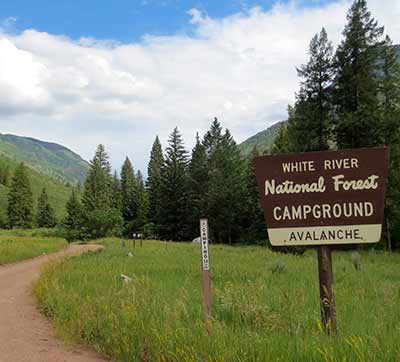
We decided to camp with our family on Friday night, then to get up early on Saturday to do the Hanging Lake hike. I was surprised by how difficult it was to find a campground near Glenwood Springs.
However, we eventually found and reserved amazing campground. In fact, it’s so good that I’m hesitant to share it. We booked a campsite at Bogen Flats Campground along the Crystal River. It was a 1 hour drive from the campground to the hanging lake trailhead. Though, not as beautiful, you could camp at Redstone Campground, which is a bit closer. We would also recommend (if you have a good clearance 2WD vehicle), the Avalanche Creek site--no reservations required. There is a KOA near Glenwood Springs that gets great reviews, too.
Lodging near Hanging Lake
If you don’t want to rough it, there are plenty of lodging options in Glenwood Springs and great places to stay.
- You can rent a private cabin or home using VRBO - Vacation Rentals By Owner
- The Glenwood Springs Inn gets some really good reviews online, and it’s close a lot of the attractions in Glenwood Springs. This place is family owned and operated, a rare find these days.
- The Glenwood Hot Springs Lodge is upscale, right there at the hot springs, and more pricey. Again, we’ve not stayed here but it looks great.
- The Hanging Lake Inn The Hanging Lake Inn is a locally-owned and family operated business. Be sure to read their TripAdvisor reviews; they get excellent ratings.
- The Caravan Inn in Glenwood Springs is an affordable, family-owned option that has a solid reputation with TripAdvisor.
Other things to Do in Nearby Glenwood Springs
If you are driving from the east, there is a good chance that you may want to spend the weekend or a couple vacation days in Glenwood Springs. If you are looking for some things to do, here are a few suggestions.
- The Hot Springs at Glenwood Springs - Sit back and soak in the main attraction and namesake of Glenwood Springs, Colorado. This is a perfect way to recover after your hike up to Hanging Lake.
- Glenwood Caverns Cave Tours and Adventure Park - Go on one of the many different cave tours, or seek some above ground thrills on the parks many rides and attractions.
- Rafting - There are a ton of rafting outfits in the Glenwood Springs area. Check out this Glenwood Springs page for a listing of Colorado guided rafting tours.
- A Whole Lot More - Glenwood Springs was voted as one of the best vacation spots in the West--there is just a surprising amount of fun to be had in this Colorado town. The best place to really explore and find out more about the area’s attractions, see the Visit Glenwood site and begin planning your trip.
Proposing at Hanging Lake
Hanging Lake is a picture perfect place for an engagement. The downside is that there is a lot of traffic on this popular Colorado trail. So, here are three tips that should help you out.
- Go early on the weekend, on a weekday, or off-season. By early, I mean parking the car by 6:45 AM.
- Hanging Lake is great, but Spouting Falls is, in my opinion an even more spectacular spot for an engagement, especially because you can walk underneath the waterfall.
- There are some rocks on the back side of Hanging Lake that you could scramble up with your significant other and get engaged under the spray and sound of the waterfall along Hanging Lake.
- For a great example of engagement photos, check out Kristen Hakes Photography's photo shoot at Hanging Lake and Spouting Rock.
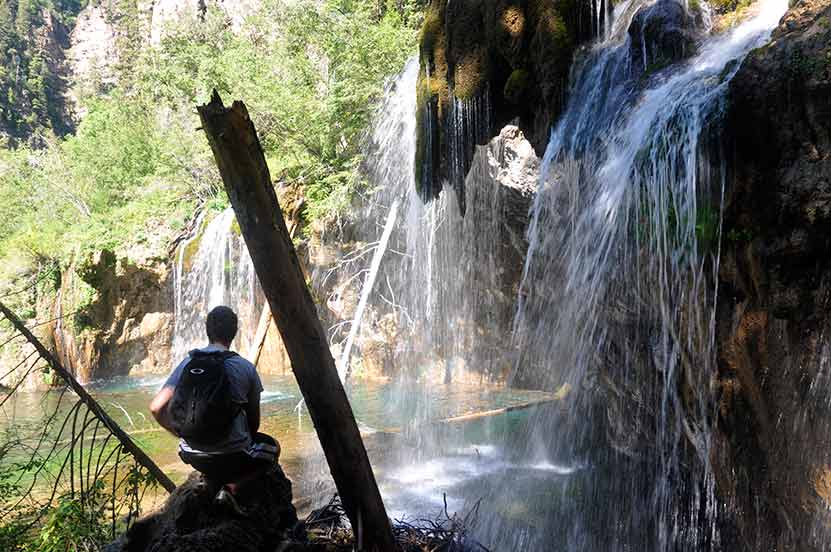
History and Geology of Colorado’s Hanging Lake
Hanging Lake was formed in a really interesting way. At some point in it’s geologic history, about 1.5 acres of the valley floor dropped out and formed the bed of the lake. This happened because it sits right on a fault line. The blue and green colors in the lake is a result of the carbonates, minerals that have dissolved in the water. Most of the rock in this area is travertine, a kind of limestone that often precipitates out of hot springs and mineral springs.
It was supposedly first discovered by an early pioneer prospecting for gold in the area. He and his family lived on the real estate near Glenwood Springs for some years before the city of Glenwood Springs purchased it as a park. Hanging Lake is now under the authority and management of the White River National Forest. In 2011, Hanging Lake was declared a National Natural Landmark.
Links & Resources for Hiking Hanging Lake :
- After the Hike: After the Hike: Burgers at Grind Glenwood
- Colorado Road Conditions: Colorado Road Conditions
- Hike Trail Map for Hanging Lake: Trail Map Link
Video of Hanging Lake
Weather Near Hanging Lake
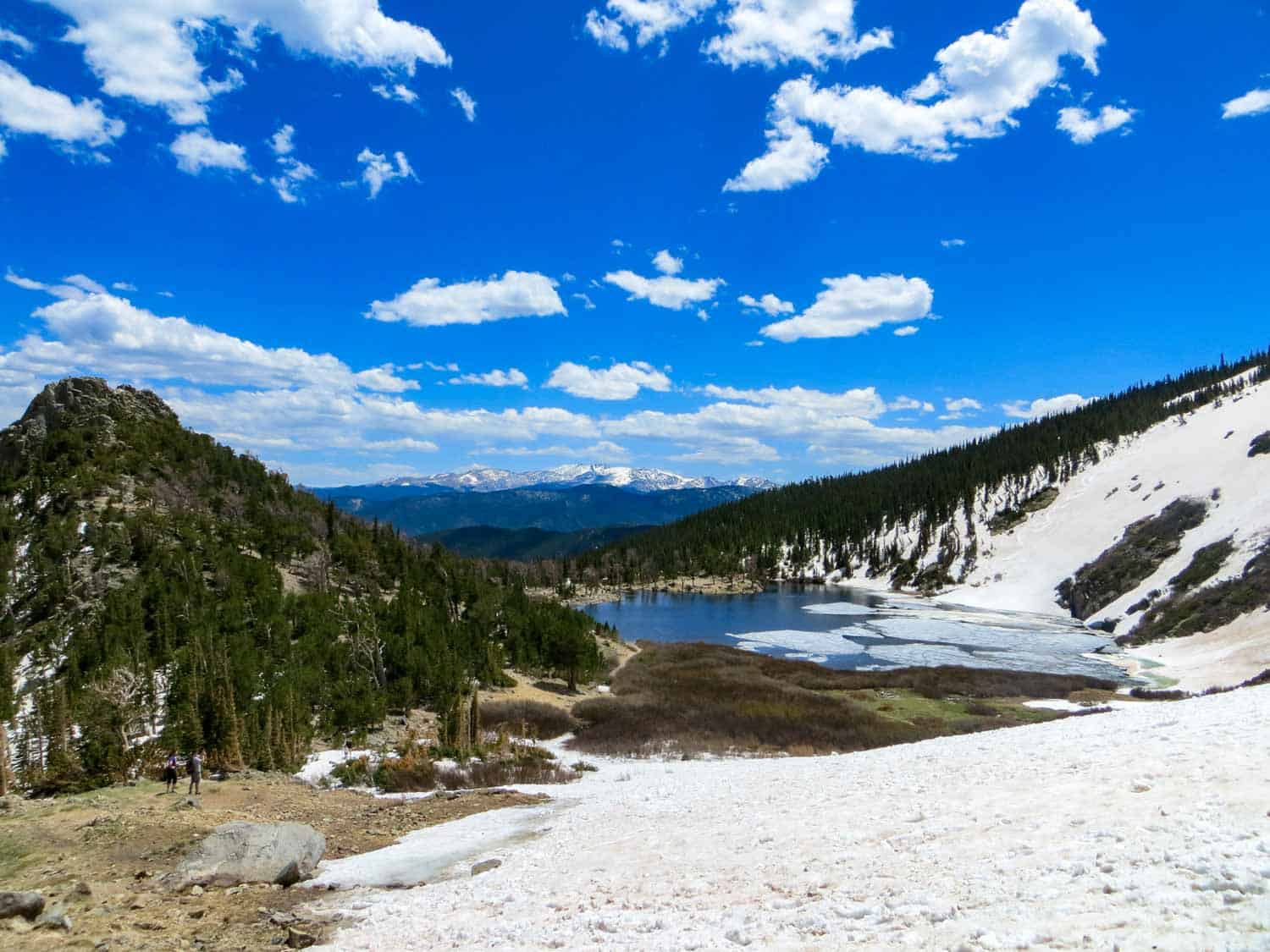
St. Mary’s Glacier near Idaho Springs, Colorado
The hike up to St. Mary’s Glacier ascends through a beautiful forest and ends with stunning panoramic views--the kind you expect from a perfect short hike in Colorado. If you walk around St. Mary's lake then hike up the glacier, you will gain incredible views of the Rocky Mountains to the west. It is a quick hike--1.5 miles round-trip if you climb to the top, but only about 1 mile round trip if you only hike the lake and back. The St. Mary's Glacier trailhead is about an hour from Denver and a great way to beat the summer heat, as there’s snow above the lake year-round.
ST. MARY'S GLACIER TRAIL SNAPSHOT
| Hike Distance | Approx. 1.5 mile Round Trip |
|---|---|
| Difficulty | Easy to Moderate |
| Duration | Approx 2 hr Round Trip |
| Trail Type | Out and Back |
| Elevation Gain | Approx. +1200' to base of the Glacier |
| Seasons | Late Spring to Early Fall |
| Dogs | Allowed On Leash |
| Hike Trail Map | Click for a Map of St. Mary’s Glacier near Idaho Springs, Colorado |
| Denver Drive Time | 55 min |
| Driving Directions to St. Mary’s Glacier near Idaho Springs, Colorado | Click for Google Map |
| Town Nearest Hike | Idaho Springs, Colorado |
| Beauty | Forest hike, year-round snow, glacier, lake, bristlecone pine, mountain range views |
| Activities | Hiking, picnics, mountain biking, skiing and snowboarding on glacier, snowshoeing in the winter |
| Video | Click For a Video of St. Mary’s Glacier hike |
| Fee | $20 Parking Fee |
It was the first day of June, and when I arrived at the base of St. Mary's Glacier, I could see snowboarders and skiers zig-zagging their way down its slopes! Even the trail up to St. Mary's lake was still decorated with snow. We only made it about halfway up the glacier as it was very slick and I didn’t have my Yaktrax, but the views we got from (almost to) the saddle at top of the glacier were incredible.
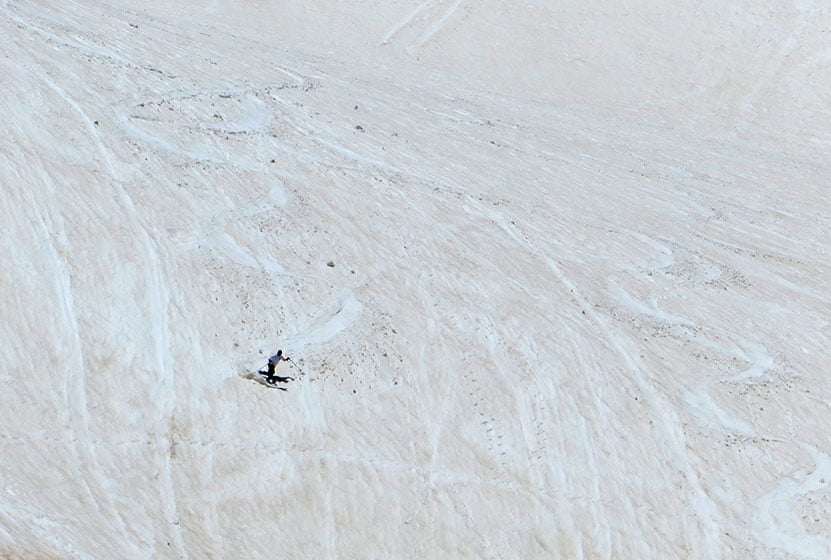
Just St. Mary's Lake alone is breathtaking – especially in the morning calm, as it reflects the glacier in its mirror surface. It's a wonderful place to have a picnic before beginning the rocky descent back down the mountain. If you walk around the right side of St. Mary's Lake, you'll come to a bridge that takes you over a small stream – this is how you pick up the trail to hike up the glacier.
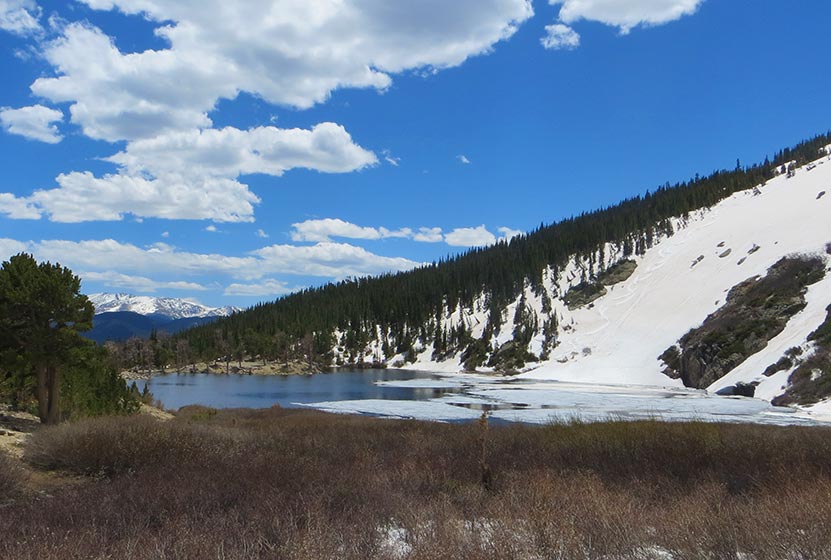
How to Get the Best Experience when Hiking to St. Mary's Glacier
First is parking at the St. Mary's Glacier Trailhead (this is important): There are two parking lots for the trailhead (one south of the trailhead which is fairly large and one north of it that’s smaller) and both require you to pay a $20 fee and display a permit on your windshield. Permits are easily obtained from marked posts in both parking lots, but you’ll need to bring your own pen to write down your license plate number on the fee envelope. Restrooms in the parking lots are a giant bonus and seemed (today, at least) to be very well-maintained. Do not park along the road as it interferes with access to homes and heavy fines are assessed.
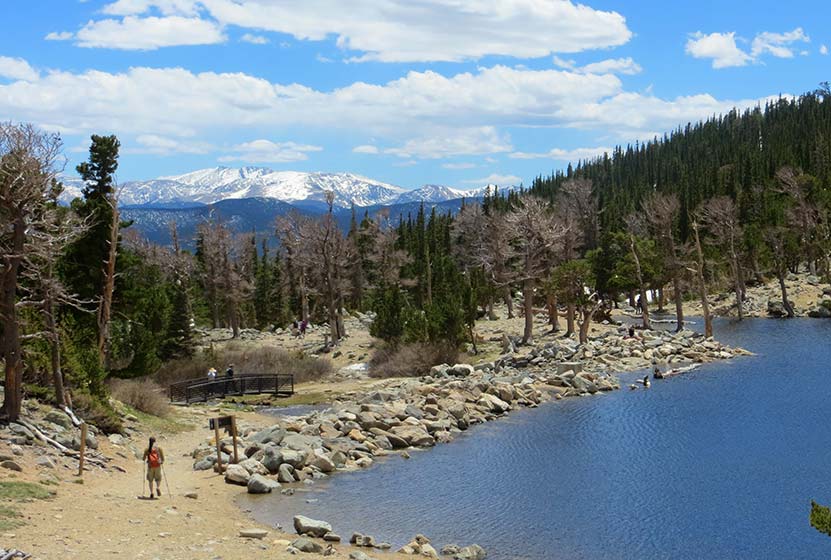
The trail up to St. Mary's Glacier is surprisingly short - just about three-quarters of a mile to the top of the glacier - but the route is extremely rocky, and at times, it could be difficult for smaller children to scramble over larger rocks. The lower portion of the trail is quite dry, but as you ascend to the glacier there is a lot of wet and deep snow to traverse through. I’d recommend wearing hiking boots, or at the very least wearing water-resistant/treated shoes with good traction. The winter season at St. Mary's would surely demand snowshoes. If you are hiking in the winter, exercise real caution. Because this hike feels short and is accessible from the interstate, it's easy to forget that you are in an alpine environment. Be sure to stay the trail because this is an area where avalanches are possible on the neighboring slopes.

The trailhead to the St. Mary’s Glacier is well-marked, but after that there are no more signs for the trail itself. I’ve heard folks on the trail say that as long as you’re climbing upwards you’ll eventually reach the glacier, but this type of unmarked trail may be a bit intimidating for less experienced hikers. Personally, in the winter I just follow footsteps in the snow and in the summer I follow the small stream upwards (reduces to a light trickle of water in the late Summer) and I have always made it to the glacier just fine.
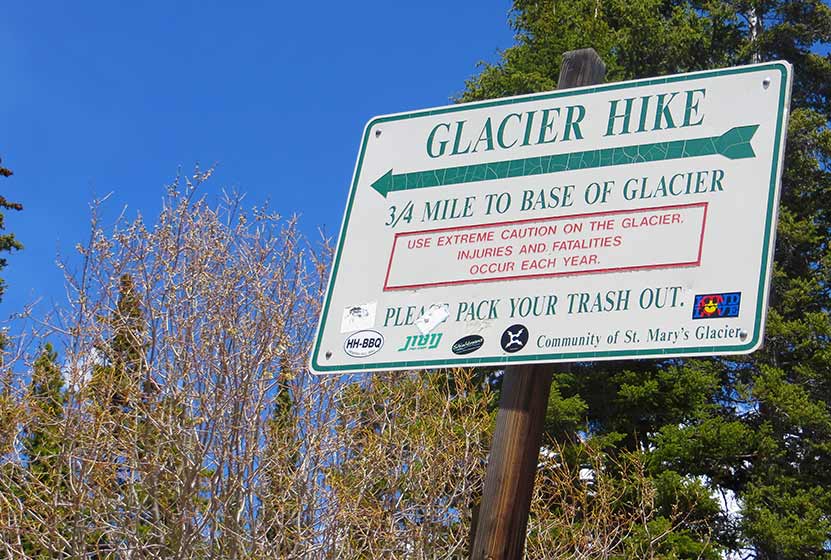
Dogs are allowed on the trail on leashes. They should really be kept leashed on the ascent and descent as the land the trail runs through is on private property. Be sure to bring some doggie bags to pick up after your best friend.
Tips & Resources for Hiking St. Mary’s Glacier near Idaho Springs, Colorado:
- Picnic Area: Pack a picnic! The St. Mary's lake is truly a stunning setting for a quick bite.
- Snowboarding Area: Bring in skis/snowboards/sleds and have a blast on the glacier.
- Ask for direction: The trail can pretty confusing of you've not hiked it before, so don’t be afraid to ask hikers coming down if you’re headed in the right direction.
- Trail Map for St. Mary’s Glacier near Idaho Springs, Colorado: Trail Map Link
- Colorado Road Conditions: Colorado Road Conditions
- After the Hike: Beau Jo's Pizza Idaho Springs
- Hike Profile Credit: We would like to express our gratitude to Leslie W., a member of the Dayhikes Near Denver Pathfinder Team, who did this hike, wrote the trip report, and took the photos you see above. Thanks, Leslie!
Weather
Map & Driving Directions
Click for Driving Directions